


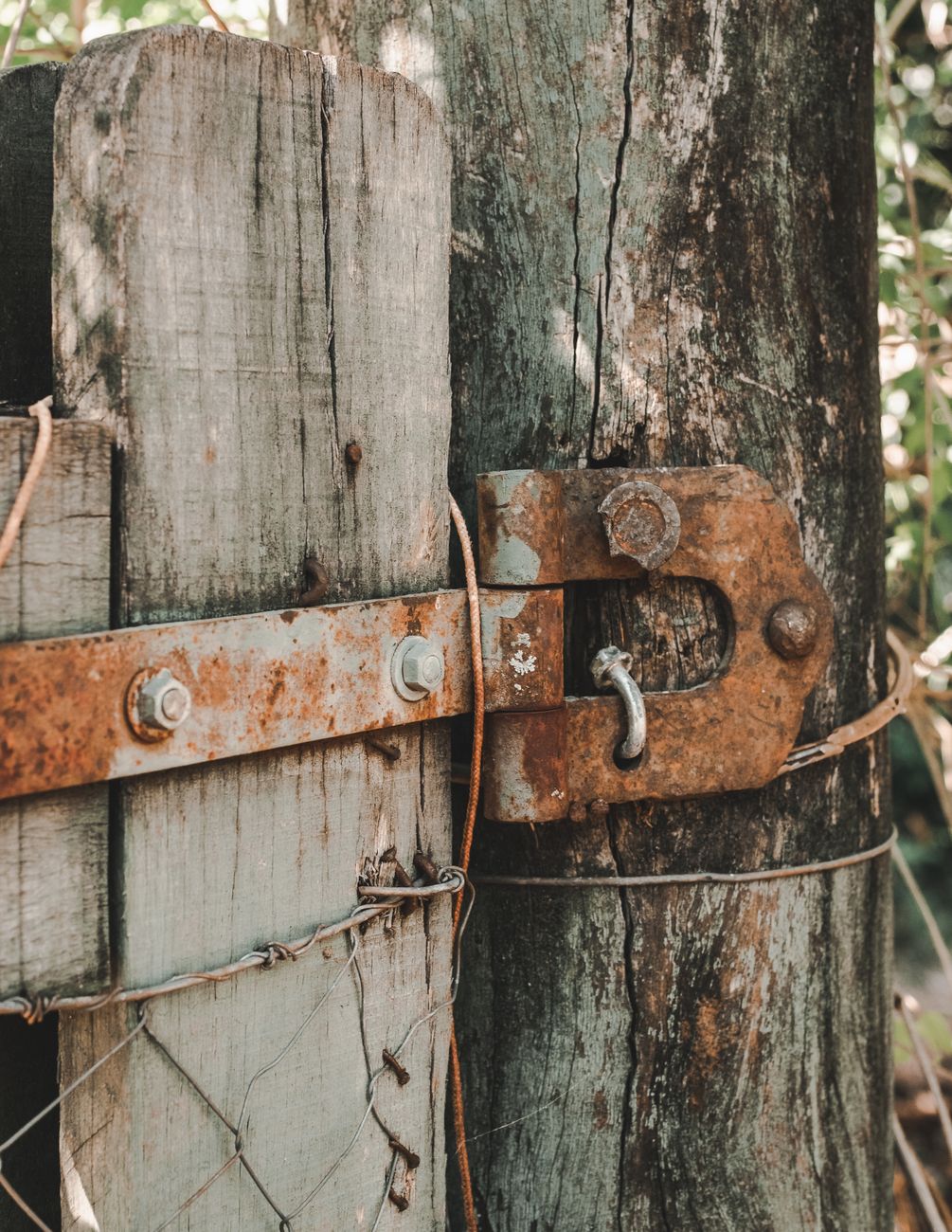
A fence is only as functional as its gate, and a gate is only as good as the hardware holding it together. Gate hardware and accessories, meaning the hinges, latches, drop rods, wheels, and closers that make a gate open, close, and lock, determine whether a gate lasts ten years or ten months. Skimp on this part and even a well-built gate will sag, stick, or fail to latch within a season.
Homeowners and contractors often spend weeks picking a fence material and then treat gate hardware as an afterthought. That’s backwards. Big Easy Fence Supply has spent years helping New Orleans customers build gates that hold up, and this guide breaks down every hardware component a complete installation needs. Visit our homepage to see our full product lineup, or keep reading to plan your gate the right way.
A complete gate needs five hardware categories: hinges to support and swing the gate, a latch to secure it, a drop rod on double gates, wheels or closers to manage weight and motion, and a corrosion-resistant finish. Miss any one of these and the gate underperforms, no matter how well the panels and frame were built. Each component has to be sized to the gate’s weight, width, and how often it’s used.
Walk gates and double drive gates don’t need identical hardware. A single walk gate might only need two or three hinges and a basic latch. A double drive gate carrying vehicle traffic needs heavier hinges, a drop rod, and often a gate wheel to keep the leading edge from sagging over time.
Standard hinges simply let a gate swing open and shut manually, while self-closing hinges use a spring mechanism to pull the gate shut automatically after someone walks through. Self-closing hinges are required on most pool enclosure gates because they remove the risk of a gate being left open. Standard hinges work fine on driveway gates, side yard gates, or any opening where automatic closing isn’t a safety requirement.
Hinge count and gauge matter as much as the hinge type. Heavier aluminum or wrought iron gates typically need three to four hinges instead of two to prevent sagging at the latch side. Our aluminum fencing line pairs well with self-closing hinges rated for the gate’s weight.

Gravity latches are the simplest option and close automatically using weight alone, magnetic latches offer a cleaner look with no mechanical parts to wear out, and key-lockable latches add security for pool areas, side yards, and commercial properties. The right choice depends on how much security the gate needs and who operates it. A backyard side gate might only need a gravity latch, while a pool enclosure needs a lockable, self-latching design.
Magnetic latches have become popular on aluminum and wrought iron gates because they resist the grit and salt air that jam mechanical parts over time. Key-lockable latches remain the standard choice anywhere an owner wants to control access, including rental and commercial properties. If you’re deciding between materials, our wrought iron fencing page covers styles that pair well with heavier-duty latch hardware.
Ready to plan your gate hardware? Call 504-608-7730 for a free estimate on your complete gate installation.
A drop rod, also called a cane bolt, is a vertical pin mounted on the leading edge of one gate panel that drops into a sleeve set in the ground or driveway, holding that panel firmly in place while the other opens and closes independently. Without a drop rod, double gates rely entirely on the latch, which puts uneven stress on the hardware and lets the gates rattle or drift out of alignment.
Drop rods matter most on double drive gates used for vehicle access. They stabilize the stationary panel against wind and uneven ground settling. Pairing a drop rod with a quality latch lets one panel serve as a fixed anchor while the other functions as the primary swing gate for daily use.

Gate wheels support the outer edge of a wide gate to prevent sagging, springs and hydraulic closers pull a gate shut at a controlled speed, and both accessories reduce strain on hinges over the life of the gate. A gate wheel isn’t decorative. It’s a load-bearing accessory that keeps a long driveway gate from dragging on the ground as the hinges wear.
Closers and springs matter most on gates opened dozens of times a day, like a commercial entrance or a busy pool gate. A properly tensioned closer shuts the gate at a consistent speed, engaging the latch every time instead of leaving it to chance.
Most pool barrier codes require the gate to be self-closing and self-latching, with the release mechanism mounted high enough that a small child can’t reach it, generally around 54 inches above the ground under widely used model codes. Exact height and placement rules vary by jurisdiction, so confirm the current requirement with your local building department before finalizing hardware for a pool gate.
The hardware has to work together to meet code. A self-closing hinge does no good without a self-latching mechanism, and a latch positioned too low defeats the purpose regardless of how well it closes. Plan the hinge, latch, and mounting height as one system, not three separate purchases.
Powder-coated steel and aluminum hardware, along with stainless steel components rated for marine or coastal use, hold up best against the humidity, rain, and salt air that cause standard hardware to rust and seize in Gulf Coast climates. Cheaper zinc-plated hardware might look fine on the shelf, but it corrodes fast once exposed to New Orleans weather year-round.
Finish matters as much for how a gate looks as how long it lasts. A hinge or latch that rusts and stains the surrounding metal undermines even a well-designed gate, so match hardware finish to the fence material from the start. For more on keeping a finished fence and gate looking sharp long-term, see our post on how to make your fence look nice.
Walk gates are lighter, narrower, and typically need only two to three hinges and a single latch, while double drive gates are heavier, wider, and require reinforced hinges, a drop rod, and often a gate wheel to manage the extra weight and vehicle traffic. Confusing the two during planning is one of the most common hardware mistakes homeowners make.
A walk gate built for foot traffic doesn’t need the same hinge gauge or drop rod setup as a driveway gate carrying vehicles daily. Matching hardware to gate type from the start avoids premature sagging and repeat repair calls. Our roundup of modern fence design ideas shows how gate style and hardware work together, and our piece on elegant wrought iron fences covers how ornamental hardware fits into a secure, upscale look.
A standard installation includes hinges, a latch, and mounting hardware at minimum. Double gates typically add a drop rod or cane bolt, and pool gates require self-closing hinges paired with a self-latching mechanism to meet safety code.
No. Self-closing hinges are generally required for pool enclosure gates under most model safety codes, but a standard side yard or driveway gate can use regular hinges. Check with your local building department if the gate borders a pool area.
A gravity latch closes using weight and drops into a keeper, while a magnetic latch uses magnets to pull the gate shut with no moving parts to wear out. Both can be paired with a key-lockable cylinder for added security.
Double gates without a drop rod or cane bolt rely entirely on the latch for stability, which puts uneven stress on the hardware. Adding a drop rod anchors one panel in place and usually solves the drifting problem.
Powder-coated aluminum or steel and marine-grade stainless steel resist rust far better than standard zinc-plated hardware in humid Gulf Coast conditions. This matters most on hinges and latches, which see constant moisture exposure and mechanical wear.
Most model safety codes call for the release mechanism to sit around 54 inches above the ground, positioned on the pool side of the gate. Exact requirements vary by state and parish, so confirm current code with your local building department before installation.
The right hardware turns a gate from a weak point into one of the strongest parts of a fence system. Properly matched hinges, latches, drop rods, and finishes mean fewer repair calls and hardware that still works the same way five years from now as it did on day one.
Big Easy Fence Supply stocks hinges, latches, drop rods, and finished hardware built for New Orleans humidity, and our team can match the right components to your walk gate or double drive gate before installation day.
Ready to get your gate hardware right the first time? Contact Big Easy Fence Supply or call 504-608-7730 for a free estimate on your complete gate installation.