Aluminum fencing costs less upfront, weighs a fraction of wrought iron, and never rusts, which makes it the lower-maintenance choice for New Orleans’ humid climate. Wrought iron costs more and needs regular rust checks, but it offers greater strength and a level of custom, hand-forged style that aluminum can only imitate.
Homeowners comparing aluminum vs wrought iron fencing often assume the two materials are nearly interchangeable, since both use vertical metal pickets and can be shaped into similar ornamental patterns. The differences show up fast once you look past the surface. Weight, rust behavior, upkeep, and price all diverge in ways that affect how a fence performs over 10, 20, or even 30 years. Picking the wrong material for your budget or climate can mean repainting a rusting fence every few years, or overspending on strength you never needed.
At Big Easy Fence Supply, we sell and help install both materials for homeowners and businesses across New Orleans, so we see firsthand which fence holds up in Gulf Coast humidity and which one owners regret a few summers later. This guide breaks down the real differences in weight, rust resistance, maintenance, security, style, and cost so you can pick the right one for your property. Visit bigeasyfencesupply.com to browse both product lines or call 504-608-7730 for a free estimate.
How Do Aluminum and Wrought Iron Fencing Differ in Weight and Build?
Aluminum fencing is dramatically lighter than wrought iron, with a standard six-foot panel weighing roughly 15 to 25 pounds compared to 60 pounds or more for the same size in wrought iron. That weight gap changes the entire installation process, since heavier wrought iron panels need deeper post footings, sturdier framing, and more labor to set correctly.
The weight difference comes down to how each material is made. Aluminum fencing is extruded from a lightweight alloy and then powder-coated for a finished look. Wrought iron fencing is forged or welded from solid iron bars, which gives it a hand-crafted heft but adds cost to both shipping and labor.
Because aluminum panels are so much lighter, crews typically install more linear feet per day with aluminum than with wrought iron. That labor gap is one reason wrought iron quotes often run higher even when material pricing looks similar on paper.
Which Rusts Faster in New Orleans’ Humid Climate?
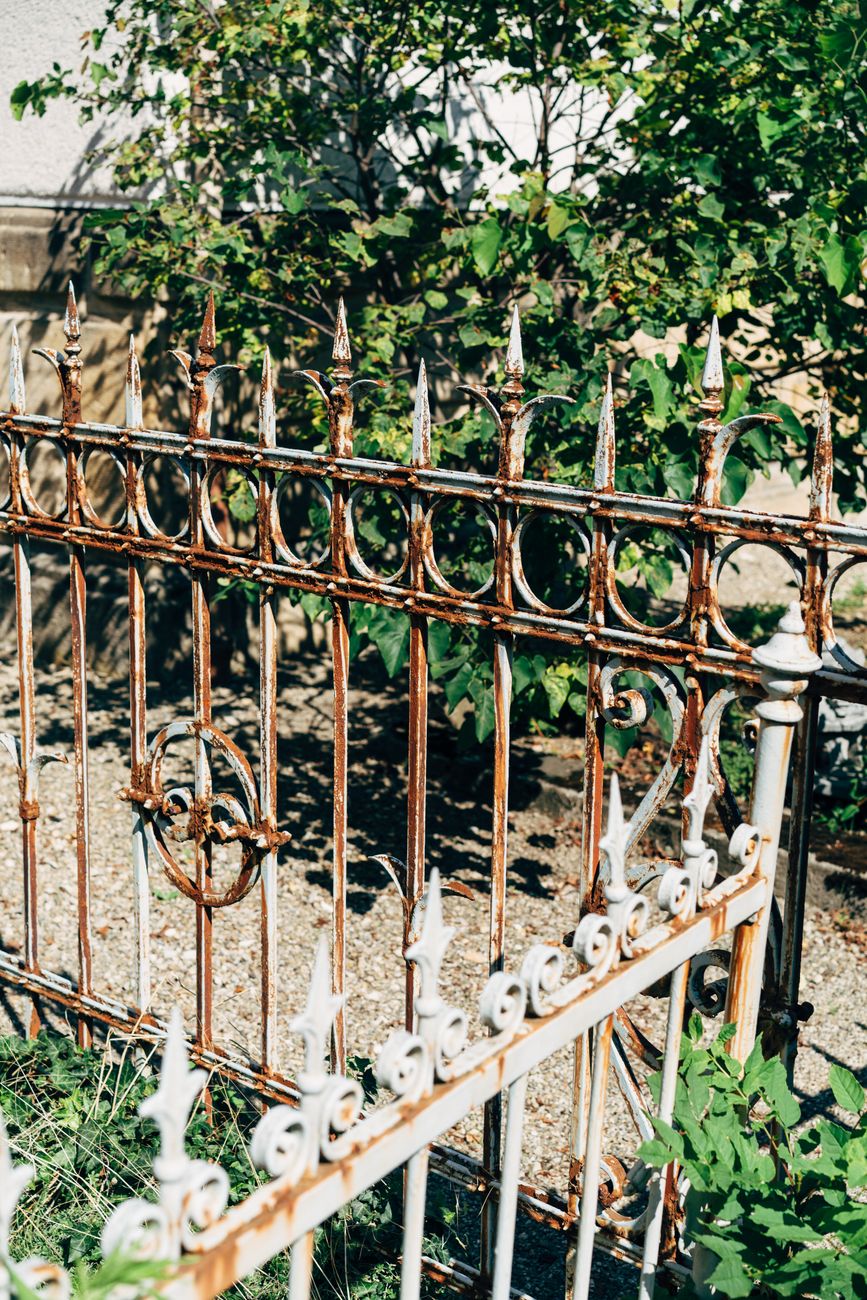
Aluminum does not rust under normal conditions because it lacks the iron content that causes oxidation, which makes it dependable in New Orleans’ year-round humidity and frequent rain. Wrought iron rusts once its powder coat or paint is scratched, chipped, or worn through, and Gulf Coast moisture speeds that process compared to drier climates.
New Orleans sits at high humidity for long stretches of the year, with heavy rain common from June through November. That combination is hard on bare metal, and wrought iron is more exposed to it because a single scratch from a lawn mower or hedge trimmer can expose raw iron underneath the coating.
Once rust starts on a wrought iron fence, it tends to spread outward from that point if it isn’t caught quickly. Aluminum sidesteps the problem entirely, since the metal itself does not corrode, even where the finish gets nicked.

How Much Maintenance Does Each Fence Type Require?
Aluminum fencing needs almost no regular maintenance beyond an occasional rinse with soap and water to keep the powder-coated finish looking new. Wrought iron requires homeowners to check for rust every few months, treat scratches right away with a wire brush and touch-up paint, and apply a fresh protective coating every few years.
This is where the two materials pull furthest apart. An aluminum fence installed today can go decades without painting, staining, or structural touch-ups, which is a big reason the material has become a default choice for owners who want a low-upkeep property line.
Wrought iron rewards owners who stay on top of small repairs and punishes those who don’t. Skipping a season of inspections in a humid climate can turn a minor scratch into a rusted-through picket that needs full replacement instead of a quick touch-up.
Not sure which upkeep routine fits your schedule? Get a free estimate and find out which material makes the most sense for your property before you buy.
Which Fence Offers Better Security, Aluminum or Wrought Iron?
Wrought iron generally offers stronger physical security because its solid iron construction resists bending, cutting, and forced entry better than aluminum’s lighter alloy. Aluminum fencing still deters casual intruders and pairs well with gate locks and automatic openers, but a determined person can bend or pry aluminum pickets more easily than iron ones.
For most residential properties, either material paired with a locking gate provides solid deterrence, since break-ins typically target doors and windows rather than fence lines. Commercial and industrial properties that need a stronger physical barrier often lean toward wrought iron or a heavier-gauge aluminum built for that purpose.
Both materials work with modern security features like automatic gate openers, keypad entry, and video monitoring. The right choice usually comes down to how much physical resistance a property actually needs versus how much weight and cost the owner wants to take on.

How Do Aluminum and Wrought Iron Compare in Style?
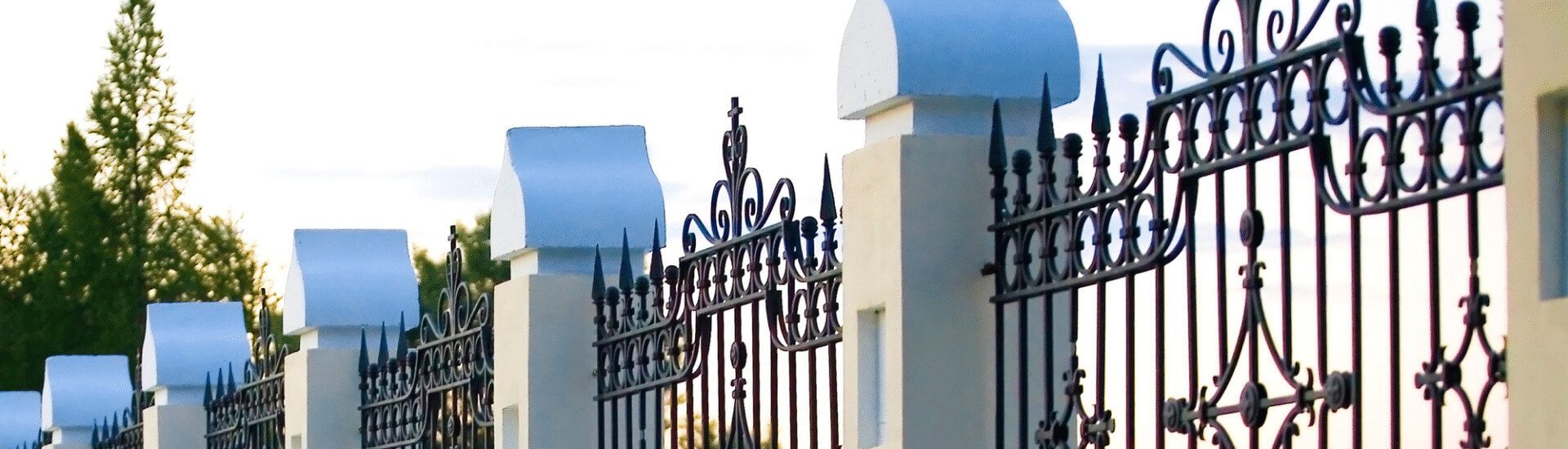
Aluminum fencing now mimics almost every wrought iron style, from simple pickets to ornate scrollwork, in colors like black, bronze, white, and green. Wrought iron still offers the deepest level of custom detail, including hand-forged elements, fleur-de-lis accents, and family crests that give a New Orleans property a distinct, old-world character.
Modern powder-coating has closed much of the visual gap between the two materials. From the sidewalk, a quality aluminum fence with ornamental caps can look nearly identical to wrought iron, which is why many homeowners choose aluminum for the look without the upkeep.
Wrought iron still wins for buyers who want fully custom ironwork, historic-style details, or a design element with genuine handmade character. If you want ideas for ornamental styling, see how New Orleans properties use wrought iron for security and curb appeal.
What Does Each Fence Cost to Buy and Install in 2026?
Aluminum fencing typically runs $22 to $60 per linear foot installed in 2026, according to industry pricing data, while wrought iron runs higher at roughly $50 to $100 or more per linear foot depending on design complexity and coating quality. The gap widens further over 20 years once wrought iron’s repainting and rust-repair costs are added in.
Material cost is only part of the equation. Because wrought iron panels are heavier and more labor-intensive to install, contractors typically charge more for labor per linear foot before adding the cost of custom ironwork or scrollwork.
Homeowners on a tighter budget can also ask about “Fence Now, Pay Later” financing, which spreads either material’s cost into manageable payments instead of requiring the full amount upfront. For a closer look at how aluminum holds up over time in Louisiana’s climate, see our lifespan breakdown.
Frequently Asked Questions
Is aluminum or wrought iron fencing better for New Orleans humidity?
Aluminum is the better choice for New Orleans’ humidity because it does not rust, while wrought iron needs consistent maintenance to prevent corrosion in the Gulf Coast’s year-round moisture. Homeowners who want a low-upkeep fence in Louisiana’s climate typically choose aluminum over wrought iron for this reason.
How much does wrought iron fencing cost compared to aluminum?
Wrought iron typically costs $50 to $100 or more per linear foot installed in 2026, compared to $22 to $60 for aluminum fencing. The gap grows over time because wrought iron needs more frequent repainting and rust repair, which matters for Louisiana homeowners budgeting long term.
Does aluminum fencing rust in Louisiana’s climate?
No. Aluminum fencing does not contain iron, so it cannot rust the way wrought iron does, even in Louisiana’s humid, rain-heavy climate. The powder-coated finish may fade slightly over decades, but the metal itself stays structurally sound without painting or sealing.
Is wrought iron more secure than aluminum fencing?
Wrought iron is generally stronger and more resistant to bending or forced entry than aluminum, which is why it’s a common choice for commercial and industrial properties in New Orleans that need a heavier physical barrier. Aluminum still works well for residential security when paired with a locking gate.
Can I finance an aluminum or wrought iron fence installation?
Yes. Big Easy Fence Supply offers “Fence Now, Pay Later” financing on both aluminum and wrought iron projects, so homeowners can spread the cost into manageable payments instead of paying the full amount upfront. Ask about eligibility when you request your free estimate.
How long do aluminum and wrought iron fences typically last?
A quality aluminum fence can last 30 to 50 years with almost no structural maintenance, while a well-maintained wrought iron fence can last for generations but requires ongoing rust prevention. In Louisiana’s humid climate, that upkeep gap is a major factor in which material homeowners choose.
Which Fence Is Right for Your New Orleans Property?
Whether you choose aluminum or wrought iron, both materials outperform wood and vinyl for durability in a coastal climate, and either one adds real curb appeal and resale value to a New Orleans property. The right pick comes down to your budget, your tolerance for upkeep, and how much security or custom styling you want from your fence line.
Big Easy Fence Supply carries both aluminum and wrought iron fencing for residential, commercial, and industrial properties across New Orleans, backed by a 24-Hour Fence Replacement Guarantee and free estimates on every job.
Call 504-608-7730 today for a free estimate on aluminum or wrought iron fencing, or ask about Fence Now, Pay Later financing to get your project started without paying the full cost upfront.