A fence is only as functional as its gate, and a gate is only as good as the hardware holding it together. Gate hardware and accessories, meaning the hinges, latches, drop rods, wheels, and closers that make a gate open, close, and lock, determine whether a gate lasts ten years or ten months. Skimp on this part and even a well-built gate will sag, stick, or fail to latch within a season.
Homeowners and contractors often spend weeks picking a fence material and then treat gate hardware as an afterthought. That’s backwards. Big Easy Fence Supply has spent years helping New Orleans customers build gates that hold up, and this guide breaks down every hardware component a complete installation needs. Visit our homepage to see our full product lineup, or keep reading to plan your gate the right way.
A complete gate needs five hardware categories: hinges to support and swing the gate, a latch to secure it, a drop rod on double gates, wheels or closers to manage weight and motion, and a corrosion-resistant finish. Miss any one of these and the gate underperforms, no matter how well the panels and frame were built. Each component has to be sized to the gate’s weight, width, and how often it’s used.
Walk gates and double drive gates don’t need identical hardware. A single walk gate might only need two or three hinges and a basic latch. A double drive gate carrying vehicle traffic needs heavier hinges, a drop rod, and often a gate wheel to keep the leading edge from sagging over time.
Standard hinges simply let a gate swing open and shut manually, while self-closing hinges use a spring mechanism to pull the gate shut automatically after someone walks through. Self-closing hinges are required on most pool enclosure gates because they remove the risk of a gate being left open. Standard hinges work fine on driveway gates, side yard gates, or any opening where automatic closing isn’t a safety requirement.
Hinge count and gauge matter as much as the hinge type. Heavier aluminum or wrought iron gates typically need three to four hinges instead of two to prevent sagging at the latch side. Our aluminum fencing line pairs well with self-closing hinges rated for the gate’s weight.

Gravity latches are the simplest option and close automatically using weight alone, magnetic latches offer a cleaner look with no mechanical parts to wear out, and key-lockable latches add security for pool areas, side yards, and commercial properties. The right choice depends on how much security the gate needs and who operates it. A backyard side gate might only need a gravity latch, while a pool enclosure needs a lockable, self-latching design.
Magnetic latches have become popular on aluminum and wrought iron gates because they resist the grit and salt air that jam mechanical parts over time. Key-lockable latches remain the standard choice anywhere an owner wants to control access, including rental and commercial properties. If you’re deciding between materials, our wrought iron fencing page covers styles that pair well with heavier-duty latch hardware.
Ready to plan your gate hardware? Call 504-608-7730 for a free estimate on your complete gate installation.
A drop rod, also called a cane bolt, is a vertical pin mounted on the leading edge of one gate panel that drops into a sleeve set in the ground or driveway, holding that panel firmly in place while the other opens and closes independently. Without a drop rod, double gates rely entirely on the latch, which puts uneven stress on the hardware and lets the gates rattle or drift out of alignment.
Drop rods matter most on double drive gates used for vehicle access. They stabilize the stationary panel against wind and uneven ground settling. Pairing a drop rod with a quality latch lets one panel serve as a fixed anchor while the other functions as the primary swing gate for daily use.
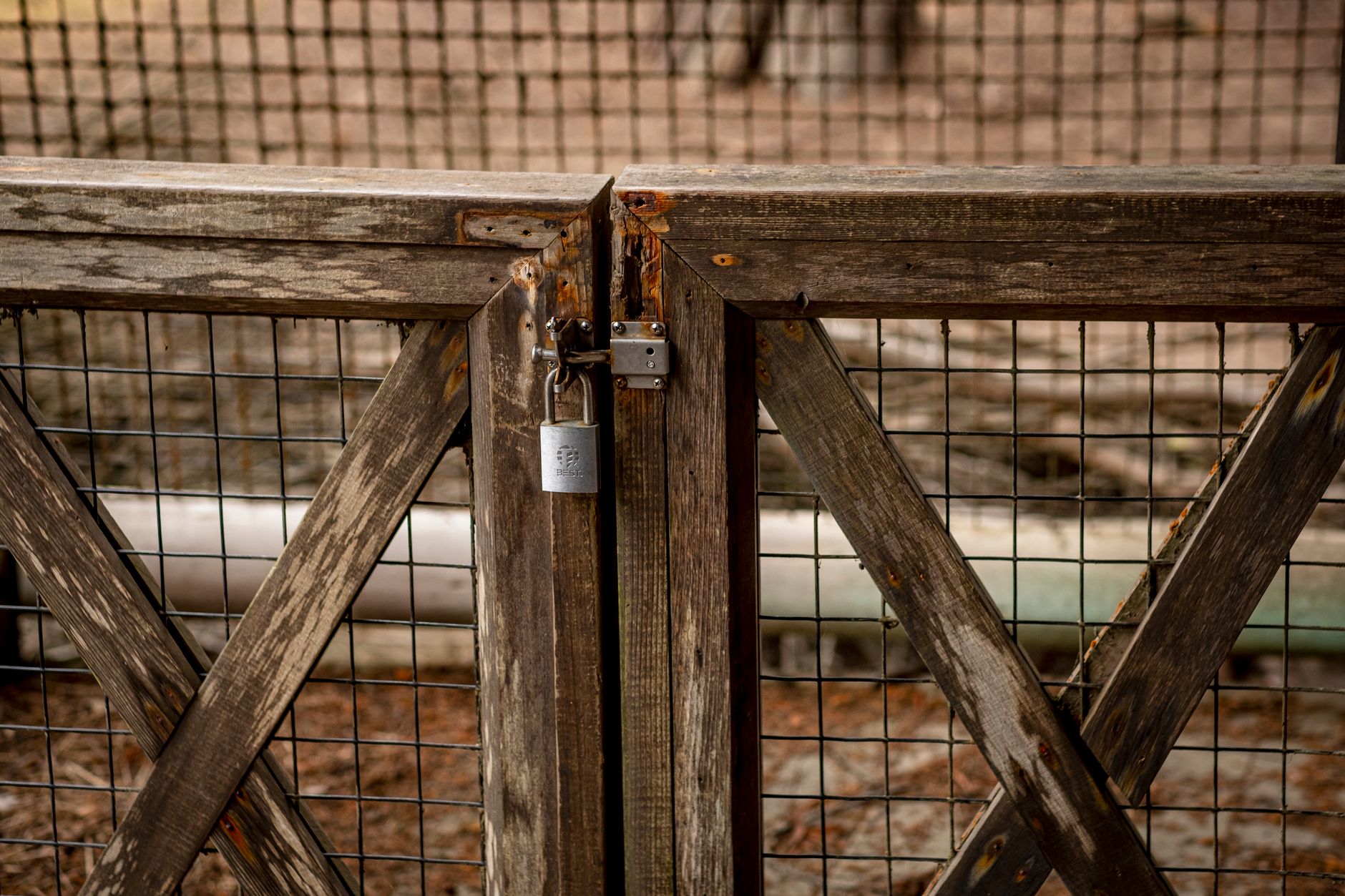
Gate wheels support the outer edge of a wide gate to prevent sagging, springs and hydraulic closers pull a gate shut at a controlled speed, and both accessories reduce strain on hinges over the life of the gate. A gate wheel isn’t decorative. It’s a load-bearing accessory that keeps a long driveway gate from dragging on the ground as the hinges wear.
Closers and springs matter most on gates opened dozens of times a day, like a commercial entrance or a busy pool gate. A properly tensioned closer shuts the gate at a consistent speed, engaging the latch every time instead of leaving it to chance.
Most pool barrier codes require the gate to be self-closing and self-latching, with the release mechanism mounted high enough that a small child can’t reach it, generally around 54 inches above the ground under widely used model codes. Exact height and placement rules vary by jurisdiction, so confirm the current requirement with your local building department before finalizing hardware for a pool gate.
The hardware has to work together to meet code. A self-closing hinge does no good without a self-latching mechanism, and a latch positioned too low defeats the purpose regardless of how well it closes. Plan the hinge, latch, and mounting height as one system, not three separate purchases.
Powder-coated steel and aluminum hardware, along with stainless steel components rated for marine or coastal use, hold up best against the humidity, rain, and salt air that cause standard hardware to rust and seize in Gulf Coast climates. Cheaper zinc-plated hardware might look fine on the shelf, but it corrodes fast once exposed to New Orleans weather year-round.
Finish matters as much for how a gate looks as how long it lasts. A hinge or latch that rusts and stains the surrounding metal undermines even a well-designed gate, so match hardware finish to the fence material from the start. For more on keeping a finished fence and gate looking sharp long-term, see our post on how to make your fence look nice.
Walk gates are lighter, narrower, and typically need only two to three hinges and a single latch, while double drive gates are heavier, wider, and require reinforced hinges, a drop rod, and often a gate wheel to manage the extra weight and vehicle traffic. Confusing the two during planning is one of the most common hardware mistakes homeowners make.
A walk gate built for foot traffic doesn’t need the same hinge gauge or drop rod setup as a driveway gate carrying vehicles daily. Matching hardware to gate type from the start avoids premature sagging and repeat repair calls. Our roundup of modern fence design ideas shows how gate style and hardware work together, and our piece on elegant wrought iron fences covers how ornamental hardware fits into a secure, upscale look.
A standard installation includes hinges, a latch, and mounting hardware at minimum. Double gates typically add a drop rod or cane bolt, and pool gates require self-closing hinges paired with a self-latching mechanism to meet safety code.
No. Self-closing hinges are generally required for pool enclosure gates under most model safety codes, but a standard side yard or driveway gate can use regular hinges. Check with your local building department if the gate borders a pool area.
A gravity latch closes using weight and drops into a keeper, while a magnetic latch uses magnets to pull the gate shut with no moving parts to wear out. Both can be paired with a key-lockable cylinder for added security.
Double gates without a drop rod or cane bolt rely entirely on the latch for stability, which puts uneven stress on the hardware. Adding a drop rod anchors one panel in place and usually solves the drifting problem.
Powder-coated aluminum or steel and marine-grade stainless steel resist rust far better than standard zinc-plated hardware in humid Gulf Coast conditions. This matters most on hinges and latches, which see constant moisture exposure and mechanical wear.
Most model safety codes call for the release mechanism to sit around 54 inches above the ground, positioned on the pool side of the gate. Exact requirements vary by state and parish, so confirm current code with your local building department before installation.
The right hardware turns a gate from a weak point into one of the strongest parts of a fence system. Properly matched hinges, latches, drop rods, and finishes mean fewer repair calls and hardware that still works the same way five years from now as it did on day one.
Big Easy Fence Supply stocks hinges, latches, drop rods, and finished hardware built for New Orleans humidity, and our team can match the right components to your walk gate or double drive gate before installation day.
Ready to get your gate hardware right the first time? Contact Big Easy Fence Supply or call 504-608-7730 for a free estimate on your complete gate installation.
To estimate fence materials, measure your total fence line in linear feet, subtract the width of any gate openings, then divide the remaining footage by your panel length (typically 6 feet) to get your panel count. Add one post per panel run plus extra posts for corners, ends, and gates, then build in a 5 to 10 percent waste buffer for cuts, slopes, and mistakes.
Ordering the wrong amount of fence material is one of the most common and most expensive mistakes a homeowner can make. Order too little and you’re stuck waiting on a second delivery mid-project, paying extra shipping, or settling for a mismatched batch. Order too much and you’ve tied up money in panels, posts, and hardware sitting unused in your yard. Learning how to estimate fence materials correctly before you buy anything saves both time and cash, and the math is simpler than most people expect once you break it into steps.
That’s exactly the kind of planning problem Big Easy Fence Supply helps New Orleans homeowners solve every week. As a local supplier of aluminum and wrought iron fencing, the team has walked hundreds of properties across the city and knows how local lot shapes, slopes, and older property lines throw off a rough guess. Visit bigeasyfencesupply.com to browse products, or read on for the exact measuring and counting process, then call for a free estimate if you’d rather skip the spreadsheet.
Walk the entire planned fence line with a 100-foot tape measure or a measuring wheel, marking every corner, gate location, and direction change with a stake or spray paint. Write down the linear footage for each straight run separately rather than guessing one total number for the whole yard. Sketch a rough diagram as you go, noting slopes, trees, utility boxes, or anything else the fence has to work around. This diagram becomes the reference point for every calculation that follows.
New Orleans lots often have irregular back corners, drainage ditches, or a slight grade toward the street, and all of that changes how many posts and panels a run actually needs. Measuring in sections, rather than one straight-line total, catches those details before they become a surprise at install time. If you’re unsure which panel style fits your layout, the products page breaks down the aluminum and wrought iron options available for residential runs.
Divide your total linear footage by your post spacing, which is typically 6 feet for aluminum and wrought iron panel systems, then add one. That formula, length divided by spacing plus one, gives you the number of line posts for a straight run. Every corner, dead end, and gate opening needs its own dedicated post on top of that count, since those posts carry more structural load than a standard line post.
A simple example: a 120-foot straight run with 6-foot spacing needs 20 line posts, plus one extra at the very end. Add two more posts for a single walk gate, and you’re at 23 posts before you’ve touched a second side of the property. Before finalizing material types, it helps to compare styles side by side using the buyer’s guide to fence materials in New Orleans, since aluminum and wrought iron posts differ slightly in spacing and mounting hardware.
Subtract the width of every gate opening from your total linear footage first, then divide what’s left by your panel length, typically 6 feet for residential aluminum sections, and round up to the next whole panel. This step is where most over-orders and under-orders happen, because it’s easy to forget the gate math and just divide the raw perimeter number. Rounding up matters too. A run that comes out to 19.3 panels still needs 20 full panels, since suppliers don’t sell partial sections.
Using the earlier 120-foot example with one 4-foot gate, you’d subtract that 4 feet, leaving 116 feet of panel run. At 6 feet per panel, that’s 19.3, rounded up to 20 panels. Height matters here too, since Bennington-style residential aluminum comes in 36 to 72 inch heights, and the residential aluminum page lists the exact panel and height combinations available so you’re ordering the right product from the start.
If your numbers are looking complicated, or you’d rather have a professional double-check them before you spend a dime, call 504-608-7730 or just call us and we’ll do the math.
Gate posts and corner posts need heavier-duty hardware than standard line posts, since they carry more weight and stress, so budget for them as a separate line item rather than folding them into your general post count. A single-swing gate typically needs two posts sized for the gate’s weight and width. Corner posts anchor two directions of fencing at once, so they’re built and set differently than a mid-run line post.
Slopes add another wrinkle. On sloped ground, aluminum and wrought iron panels are usually installed in a stepped pattern rather than raked to follow the grade exactly, which can shorten the effective coverage of each panel and push your total panel count up slightly. If your property has any grade change, add a 5 percent cushion to your panel estimate to cover the stepping. A well-planned fence is also a long-term investment, and understanding how long aluminum fencing lasts in New Orleans helps put the extra planning time in perspective.

Add a 5 to 10 percent buffer on top of your calculated panel and post counts to cover cutting errors, damaged pieces, and small measurement mistakes discovered during install. Even careful DIYers run into a bent post, a panel that doesn’t sit right on uneven ground, or a measurement that was off by a few inches once digging starts. A small buffer means you finish the project without a second trip to the supplier.
This buffer also gives you flexibility for finishing touches. If you’re planning post caps, decorative trim, or matching hardware to keep the finished fence looking sharp, the tips in how to make your fence look nice are worth reading before you finalize your order, since some of those details need to be ordered alongside your main materials.
Estimating fence materials correctly means fewer delays, less wasted money, and a smoother install from the first post to the last panel. Measuring in sections, accounting for gates and corners, and building in a waste buffer takes the guesswork out of the process before you ever place an order.
Big Easy Fence Supply has helped New Orleans homeowners get these numbers right on more than 1,500 local projects, and the team can walk your property or review your measurements before you buy a single panel.
Call Big Easy Fence Supply today at 504-608-7730 for a free estimate, or reach out through the contact page to ask about “Fence Now, Pay Later” financing on your next project.
With standard 6-foot post spacing, a 100-foot straight run needs about 17 line posts, plus additional posts for any corners, ends, or gates along that run. Always round up when the math produces a decimal, since posts can’t be split.
Bennington residential aluminum panels are typically sold in 6-foot sections, with height options ranging from 36 inches up to 72 inches depending on the style. The right height depends on whether the fence is meant for pool safety, privacy, or general property definition.
Yes. Subtract every gate opening from your total linear footage before dividing by panel length, or your panel count will come out too high. Gates use dedicated posts and hardware instead of a standard fence panel.
Add roughly a 5 percent cushion to your panel count on sloped properties, since aluminum and wrought iron panels are typically stepped rather than raked to match the grade. This stepping slightly reduces the horizontal coverage of each panel section.
Yes. Big Easy Fence Supply offers free estimates for New Orleans homeowners and can review your measurements or visit your property to confirm exact panel, post, and gate counts. Call 504-608-7730 to schedule a walkthrough.
A line post supports a single straight run of fencing, while a corner post anchors two fence runs meeting at an angle and carries more structural load. Corner posts are typically set deeper and with more concrete than standard line posts.
Ordering fence supplies in New Orleans generally means four moves: get a free on-site estimate, choose between aluminum or wrought iron, decide between standard lead times or the faster Quick Ship option, then lock in an installation date. Most residential orders go from first phone call to finished fence within a few weeks, and pre-made Quick Ship styles can move noticeably faster than custom orders.
Getting ready to order fence supplies in New Orleans takes more than picking a style out of a catalog. The city’s humidity, heavy rain, and clay-heavy soil all affect which materials hold up over time, and a smooth order depends on getting accurate measurements, a written estimate, and a realistic delivery timeline before anything goes into the ground. Homeowners and property managers who plan each step, from choosing a material to scheduling installation, avoid the back-and-forth that slows most fence projects down by weeks.
Big Easy Fence Supply walks Greater New Orleans customers through that process from the first phone call to the final walkthrough, supplying and installing aluminum and wrought iron fencing for residential, commercial, and industrial properties. Call 504-608-7730 or request a free estimate online to start your order the right way.
Ordering fence supplies in New Orleans typically follows a straightforward sequence: schedule a free estimate, meet with a fencing specialist to review materials and layout, receive a written quote, confirm your order and delivery method, then schedule installation. Most residential jobs move from that first call to a finished fence within a few weeks. Commercial and industrial orders may take longer depending on perimeter size and material availability.
Skipping steps rarely saves time. Homeowners who order materials before a specialist walks the property often end up with the wrong panel height, gate width, or post spacing for their yard. If you’re replacing an old fence, removal and disposal of the existing structure gets scheduled as part of the same order, so there’s no separate cleanup step to arrange afterward.
Most New Orleans properties end up with either aluminum or wrought iron, since both resist the region’s humidity and heavy rain far better than wood without the upkeep that chain-link or vinyl demand. Aluminum fits residential yards, pool enclosures, and commercial perimeters because the powder-coated finish won’t rust or rot in coastal air. Wrought iron suits historic homes and properties that want a heavier, more ornamental look, and it also holds up well on commercial fronts that need a formal appearance.
Both materials come in several product lines, so it helps to see them side by side before you commit to an order. The products page lists every current aluminum and wrought iron option, including industrial-grade lines for larger perimeters, and this buyer’s guide to fence materials in New Orleans breaks down pricing and maintenance for each.
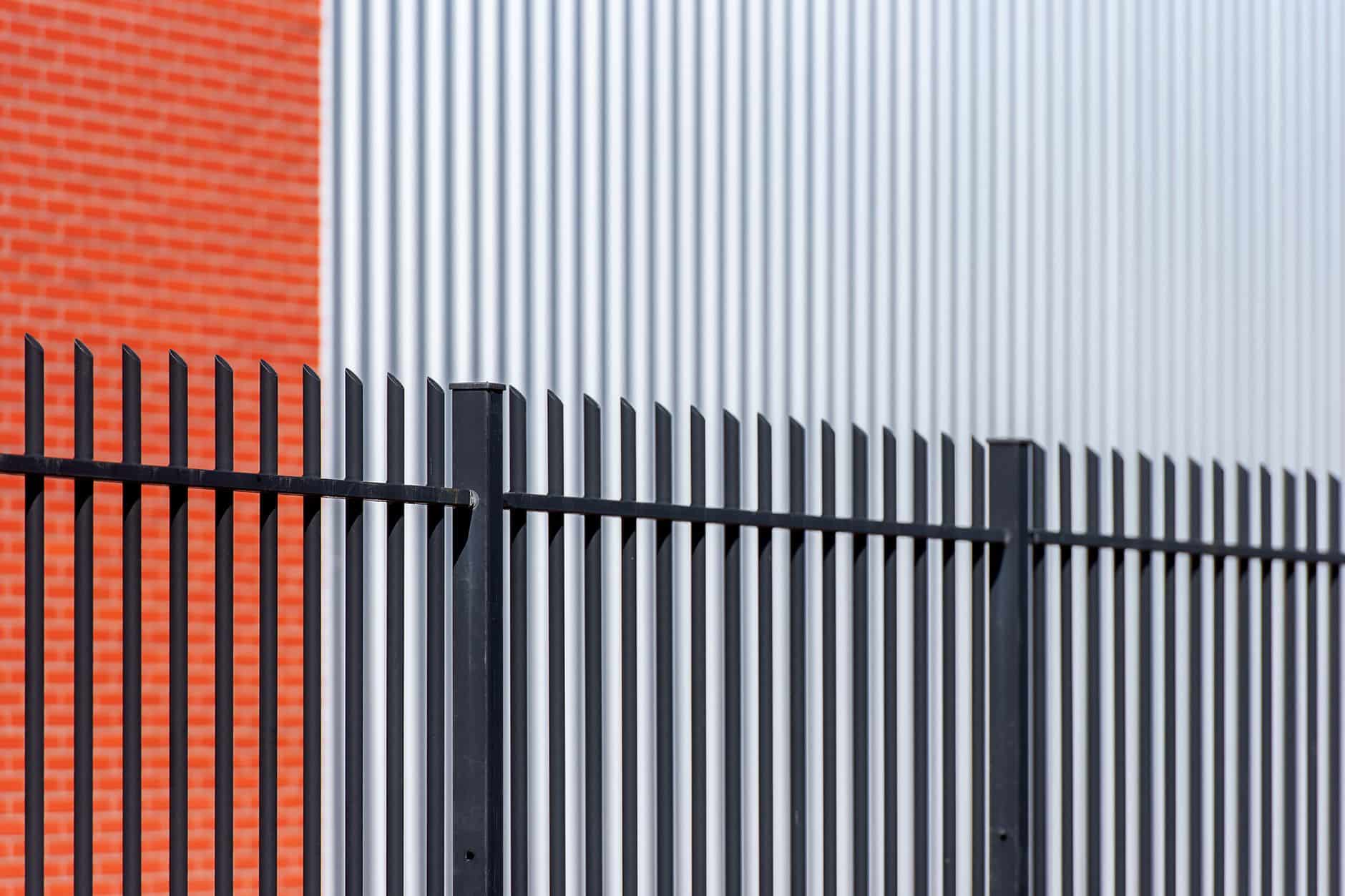
Aluminum fencing comes in several style lines, including Specrail, AFS residential styles, and the Bennington line, which ranges from 36 to 72 inches tall, so most homeowners can match a fence to their home’s architecture and privacy needs. Wrought iron styles lean more decorative and work well on older New Orleans properties with existing ironwork or gates. Picking a height, style, and gate placement before the estimate keeps the quote accurate the first time and avoids ordering the wrong hardware.
Not sure what fits your home yet? This roundup of modern fence design ideas shows current styles being ordered around Greater New Orleans. Gate installation and repair can be added to any order, so mention it up front if your project includes a driveway or walkway gate. Call 504-608-7730 if you want a specialist to narrow the options before your estimate.
A specialist measures your property, confirms gate locations, and factors in slope or obstacles before putting together a written quote, so the number you order from matches what actually gets installed. This step is quick, usually done in a single visit, and it’s free with no obligation to buy. Once you approve the quote, that becomes your official order and locks in pricing before production begins.
Rough self-measurements can get you in the ballpark, but they rarely account for gate hardware, corner posts, or grade changes across a yard. A professional measurement protects against reordering materials mid-project, which is one of the most common reasons fence installs run behind schedule.
The Quick Ship program covers a set of pre-made residential and commercial aluminum fence styles kept ready for faster delivery, so homeowners who don’t need a fully custom design can skip most of the standard lead time. It’s the fastest way to order fence supplies in New Orleans when your timeline is tight, such as before selling a home, closing on a new property, or finishing a pool install before summer.
Quick Ship isn’t the right fit for every property, since custom heights, colors, or gate configurations still take longer to source. A specialist can confirm during your estimate whether a Quick Ship style matches what your yard needs, or whether a standard order makes more sense. Details on current styles are on the Quick Ship page.
Standard aluminum and wrought iron orders usually install within a few weeks of a confirmed quote, while Quick Ship styles can move faster, and every completed installation is backed by a 24-Hour Fence Replacement Guarantee. Installation itself typically takes one to two days for an average residential yard, depending on total footage and gate count.
Aluminum holds up especially well once it’s in the ground. This breakdown of how long aluminum fencing lasts in New Orleans explains why it’s become the most-ordered material for the area’s climate. “Fence Now, Pay Later” financing is available if you’d rather spread out payment while your order moves through production and install, and repair or maintenance visits can be scheduled the same way if your fence ever needs adjustment down the road.
Most residential orders move from the initial estimate to a finished installation within a few weeks. Standard aluminum and wrought iron styles take longer to source than Quick Ship options, which are kept ready for faster delivery around Greater New Orleans.
Quick Ship is a set of pre-made residential and commercial aluminum fence styles stocked for faster turnaround. It’s the fastest way to order fence supplies when a fully custom design isn’t necessary.
Aluminum, including the Specrail and Bennington lines, is lighter, powder-coated, and virtually maintenance-free in humid climates. Wrought iron is heavier and more ornamental, often chosen for historic New Orleans homes that want a traditional look.
Yes. The “Fence Now, Pay Later” financing option lets customers order and install their fence now while spreading out payments, which is useful for larger commercial or industrial perimeter orders.
Every installation includes a 24-Hour Fence Replacement Guarantee, so issues found shortly after installation are addressed quickly. This guarantee applies to both aluminum and wrought iron fence orders.
Yes. Big Easy Fence Supply provides free, no-obligation estimates for residential, commercial, and industrial properties across Greater New Orleans before any materials are ordered.
Ordering fence supplies the right way means an accurate measurement, a material that suits New Orleans weather, a clear quote, and a delivery method that matches your timeline. Skipping any one of those steps is usually what causes delays, mismatched hardware, or materials down the line, and it can turn a simple order into a second round of measuring and re-quoting.
Big Easy Fence Supply handles every part of that process in-house, from the first estimate through installation, gate work, and cleanup. Contact Big Easy Fence Supply or call 504-608-7730 today to schedule your free estimate and get your fence order started.
Aluminum fencing costs less upfront, weighs a fraction of wrought iron, and never rusts, which makes it the lower-maintenance choice for New Orleans’ humid climate. Wrought iron costs more and needs regular rust checks, but it offers greater strength and a level of custom, hand-forged style that aluminum can only imitate.
Homeowners comparing aluminum vs wrought iron fencing often assume the two materials are nearly interchangeable, since both use vertical metal pickets and can be shaped into similar ornamental patterns. The differences show up fast once you look past the surface. Weight, rust behavior, upkeep, and price all diverge in ways that affect how a fence performs over 10, 20, or even 30 years. Picking the wrong material for your budget or climate can mean repainting a rusting fence every few years, or overspending on strength you never needed.
At Big Easy Fence Supply, we sell and help install both materials for homeowners and businesses across New Orleans, so we see firsthand which fence holds up in Gulf Coast humidity and which one owners regret a few summers later. This guide breaks down the real differences in weight, rust resistance, maintenance, security, style, and cost so you can pick the right one for your property. Visit bigeasyfencesupply.com to browse both product lines or call 504-608-7730 for a free estimate.
Aluminum fencing is dramatically lighter than wrought iron, with a standard six-foot panel weighing roughly 15 to 25 pounds compared to 60 pounds or more for the same size in wrought iron. That weight gap changes the entire installation process, since heavier wrought iron panels need deeper post footings, sturdier framing, and more labor to set correctly.
The weight difference comes down to how each material is made. Aluminum fencing is extruded from a lightweight alloy and then powder-coated for a finished look. Wrought iron fencing is forged or welded from solid iron bars, which gives it a hand-crafted heft but adds cost to both shipping and labor.
Because aluminum panels are so much lighter, crews typically install more linear feet per day with aluminum than with wrought iron. That labor gap is one reason wrought iron quotes often run higher even when material pricing looks similar on paper.
Aluminum does not rust under normal conditions because it lacks the iron content that causes oxidation, which makes it dependable in New Orleans’ year-round humidity and frequent rain. Wrought iron rusts once its powder coat or paint is scratched, chipped, or worn through, and Gulf Coast moisture speeds that process compared to drier climates.
New Orleans sits at high humidity for long stretches of the year, with heavy rain common from June through November. That combination is hard on bare metal, and wrought iron is more exposed to it because a single scratch from a lawn mower or hedge trimmer can expose raw iron underneath the coating.
Once rust starts on a wrought iron fence, it tends to spread outward from that point if it isn’t caught quickly. Aluminum sidesteps the problem entirely, since the metal itself does not corrode, even where the finish gets nicked.
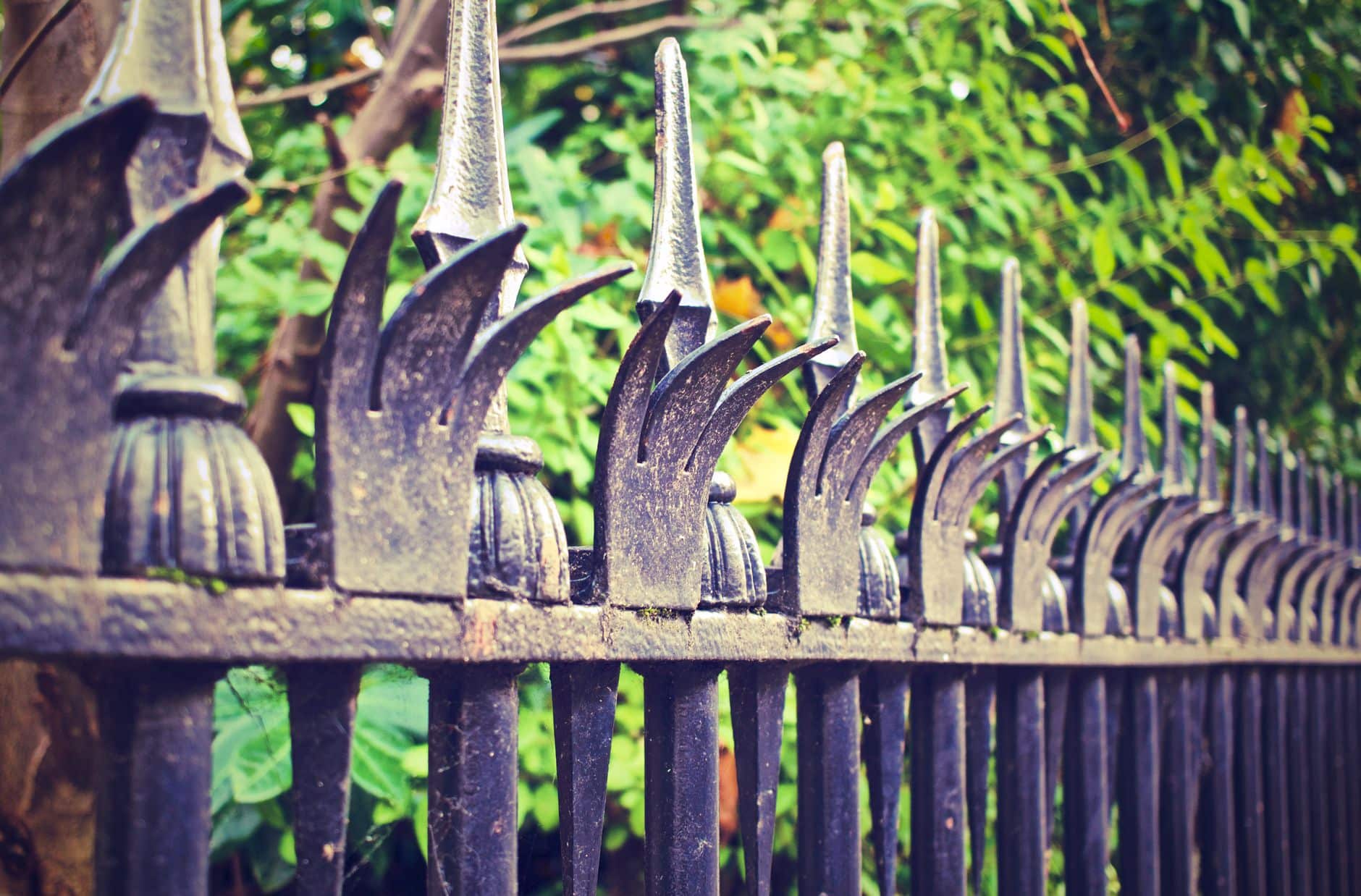
Aluminum fencing needs almost no regular maintenance beyond an occasional rinse with soap and water to keep the powder-coated finish looking new. Wrought iron requires homeowners to check for rust every few months, treat scratches right away with a wire brush and touch-up paint, and apply a fresh protective coating every few years.
This is where the two materials pull furthest apart. An aluminum fence installed today can go decades without painting, staining, or structural touch-ups, which is a big reason the material has become a default choice for owners who want a low-upkeep property line.
Wrought iron rewards owners who stay on top of small repairs and punishes those who don’t. Skipping a season of inspections in a humid climate can turn a minor scratch into a rusted-through picket that needs full replacement instead of a quick touch-up.
Not sure which upkeep routine fits your schedule? Get a free estimate and find out which material makes the most sense for your property before you buy.
Wrought iron generally offers stronger physical security because its solid iron construction resists bending, cutting, and forced entry better than aluminum’s lighter alloy. Aluminum fencing still deters casual intruders and pairs well with gate locks and automatic openers, but a determined person can bend or pry aluminum pickets more easily than iron ones.
For most residential properties, either material paired with a locking gate provides solid deterrence, since break-ins typically target doors and windows rather than fence lines. Commercial and industrial properties that need a stronger physical barrier often lean toward wrought iron or a heavier-gauge aluminum built for that purpose.
Both materials work with modern security features like automatic gate openers, keypad entry, and video monitoring. The right choice usually comes down to how much physical resistance a property actually needs versus how much weight and cost the owner wants to take on.
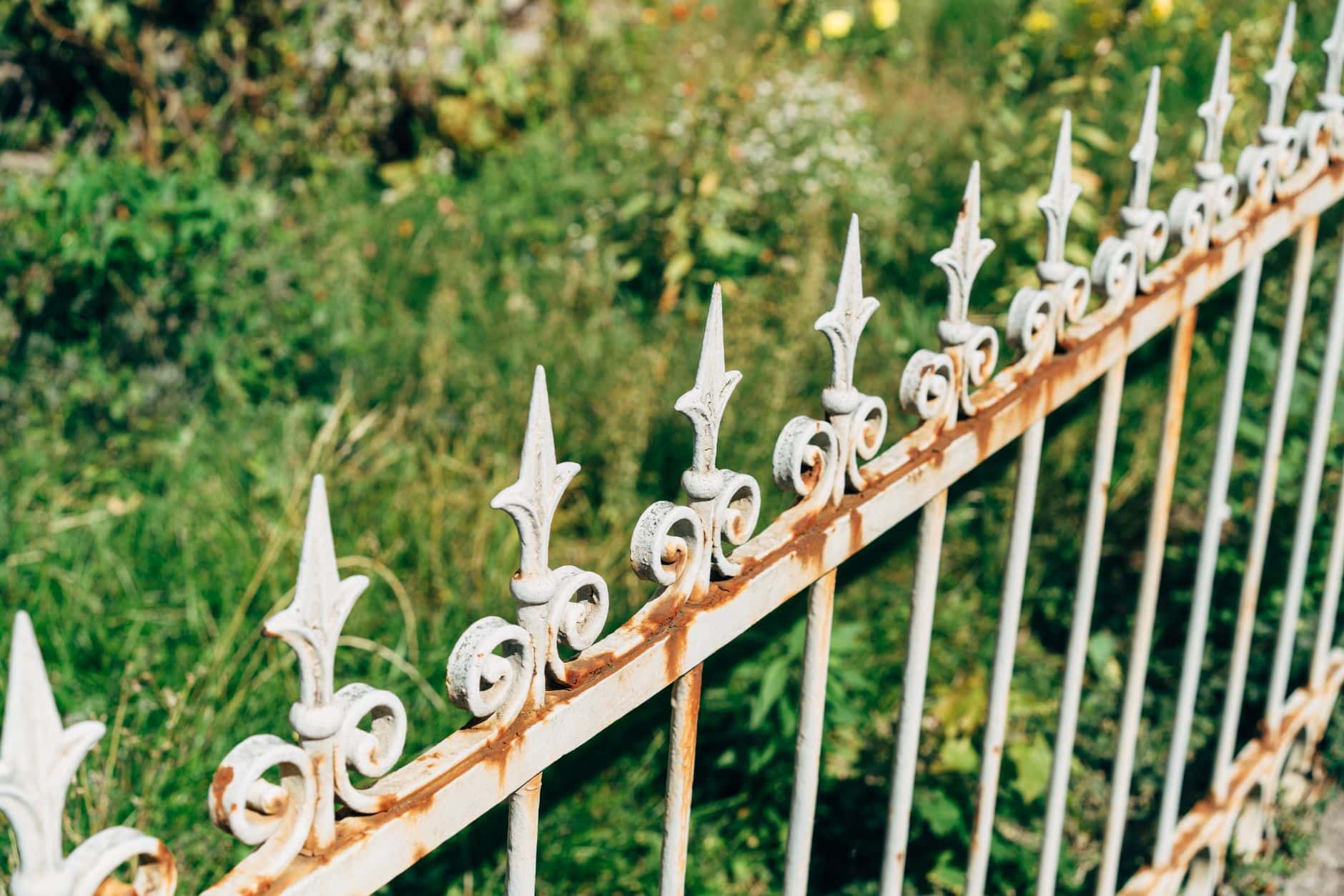
Aluminum fencing now mimics almost every wrought iron style, from simple pickets to ornate scrollwork, in colors like black, bronze, white, and green. Wrought iron still offers the deepest level of custom detail, including hand-forged elements, fleur-de-lis accents, and family crests that give a New Orleans property a distinct, old-world character.
Modern powder-coating has closed much of the visual gap between the two materials. From the sidewalk, a quality aluminum fence with ornamental caps can look nearly identical to wrought iron, which is why many homeowners choose aluminum for the look without the upkeep.
Wrought iron still wins for buyers who want fully custom ironwork, historic-style details, or a design element with genuine handmade character. If you want ideas for ornamental styling, see how New Orleans properties use wrought iron for security and curb appeal.
Aluminum fencing typically runs $22 to $60 per linear foot installed in 2026, according to industry pricing data, while wrought iron runs higher at roughly $50 to $100 or more per linear foot depending on design complexity and coating quality. The gap widens further over 20 years once wrought iron’s repainting and rust-repair costs are added in.
Material cost is only part of the equation. Because wrought iron panels are heavier and more labor-intensive to install, contractors typically charge more for labor per linear foot before adding the cost of custom ironwork or scrollwork.
Homeowners on a tighter budget can also ask about “Fence Now, Pay Later” financing, which spreads either material’s cost into manageable payments instead of requiring the full amount upfront. For a closer look at how aluminum holds up over time in Louisiana’s climate, see our lifespan breakdown.
Aluminum is the better choice for New Orleans’ humidity because it does not rust, while wrought iron needs consistent maintenance to prevent corrosion in the Gulf Coast’s year-round moisture. Homeowners who want a low-upkeep fence in Louisiana’s climate typically choose aluminum over wrought iron for this reason.
Wrought iron typically costs $50 to $100 or more per linear foot installed in 2026, compared to $22 to $60 for aluminum fencing. The gap grows over time because wrought iron needs more frequent repainting and rust repair, which matters for Louisiana homeowners budgeting long term.
No. Aluminum fencing does not contain iron, so it cannot rust the way wrought iron does, even in Louisiana’s humid, rain-heavy climate. The powder-coated finish may fade slightly over decades, but the metal itself stays structurally sound without painting or sealing.
Wrought iron is generally stronger and more resistant to bending or forced entry than aluminum, which is why it’s a common choice for commercial and industrial properties in New Orleans that need a heavier physical barrier. Aluminum still works well for residential security when paired with a locking gate.
Yes. Big Easy Fence Supply offers “Fence Now, Pay Later” financing on both aluminum and wrought iron projects, so homeowners can spread the cost into manageable payments instead of paying the full amount upfront. Ask about eligibility when you request your free estimate.
A quality aluminum fence can last 30 to 50 years with almost no structural maintenance, while a well-maintained wrought iron fence can last for generations but requires ongoing rust prevention. In Louisiana’s humid climate, that upkeep gap is a major factor in which material homeowners choose.
Whether you choose aluminum or wrought iron, both materials outperform wood and vinyl for durability in a coastal climate, and either one adds real curb appeal and resale value to a New Orleans property. The right pick comes down to your budget, your tolerance for upkeep, and how much security or custom styling you want from your fence line.
Big Easy Fence Supply carries both aluminum and wrought iron fencing for residential, commercial, and industrial properties across New Orleans, backed by a 24-Hour Fence Replacement Guarantee and free estimates on every job.
Call 504-608-7730 today for a free estimate on aluminum or wrought iron fencing, or ask about Fence Now, Pay Later financing to get your project started without paying the full cost upfront.
In New Orleans, most yards can have a fence up to 8 feet under the city’s zoning code, dropping to 7 feet in historic districts. Front yards must be open-style fences, and some neighborhoods set much lower limits. Pool barriers must be at least 4 feet under Louisiana state code. The right fence height for your property still depends on your specific zoning district. Confirm the exact number with the City of New Orleans Safety and Permits before you order materials.
Picking the fence height for your property is not just a style decision. It affects your privacy, your security, and whether your project passes inspection on the first try. Louisiana homeowners deal with a mix of local zoning limits, HOA covenants, and pool safety codes that can each point to a different number. Get the height wrong and you may end up cutting panels down, reordering materials, or fighting a permit rejection weeks into your project.
Big Easy Fence Supply works with homeowners across the New Orleans area who are sorting out this exact question before they place an order. Visit Big Easy Fence Supply to see the aluminum and wrought iron heights we stock, or keep reading for a breakdown of how the right number changes depending on where the fence sits on your property.
Quick reference for common Louisiana fence heights:
| Location or Purpose | Typical Height |
|---|---|
| Any yard, citywide general rule (CZO §21.6.N.1) | Up to 8 feet |
| Historic districts | Up to 7 feet |
| Front yards | Open-style required; exact height varies by zoning district |
| Boundary with an industrial district | Up to 10 feet |
| Pool barrier (minimum) | 4 feet (LA Admin Code, Title 51) |
New Orleans requires front yard fences to be open-style under the Comprehensive Zoning Ordinance. The general citywide height maximum for any yard is 8 feet, or 7 feet in historic districts. Some neighborhoods set a much lower front yard limit, so the exact number for your lot depends on your specific zoning district.
Under CZO §21.6.N.1, the city’s baseline rule allows a fence up to 8 feet in any yard, dropping to 7 feet within national historic districts. Front yards must still use an open-style design. Certain neighborhoods apply their own overlay rules that cut this significantly. In the Lake Vista and Lake Terrace areas, for example, front yard fences top out at just 1.5 feet. Because these limits shift by zoning district, confirm your property’s exact front yard height with New Orleans Safety and Permits before ordering panels.
Our residential aluminum lineup includes the Bennington series in 36, 42, 48, 54, 60, and 72-inch heights, so you can match the panel to whatever limit applies to your lot.
In most New Orleans zoning districts, side and rear yard fences can reach the citywide maximum of 8 feet, or 7 feet in historic districts. That gives you plenty of height for privacy and security. Some neighborhoods cap rear and side yards much lower, so confirm your district’s limit before choosing a panel height.
Many homeowners choose 6 to 8-foot panels for backyard privacy, since that range blocks eye-level views from neighboring yards. If security matters more than privacy, a wrought iron fence with closely spaced pickets can discourage climbing while keeping sightlines open for you and for law enforcement. Pools, detached garages, and side yards near a busy street are usually where the extra height pays off. In neighborhoods like Lake Vista and Lake Terrace, though, rear yard fences are capped at 5 feet, so check your district before ordering.
Explore the wrought iron fencing lineup if you want that combination of height, strength, and open visibility for a backyard or side yard.
Not sure which height fits your yard? Get in touch for a free estimate, or call 504-608-7730 to walk through your property’s layout with our team.
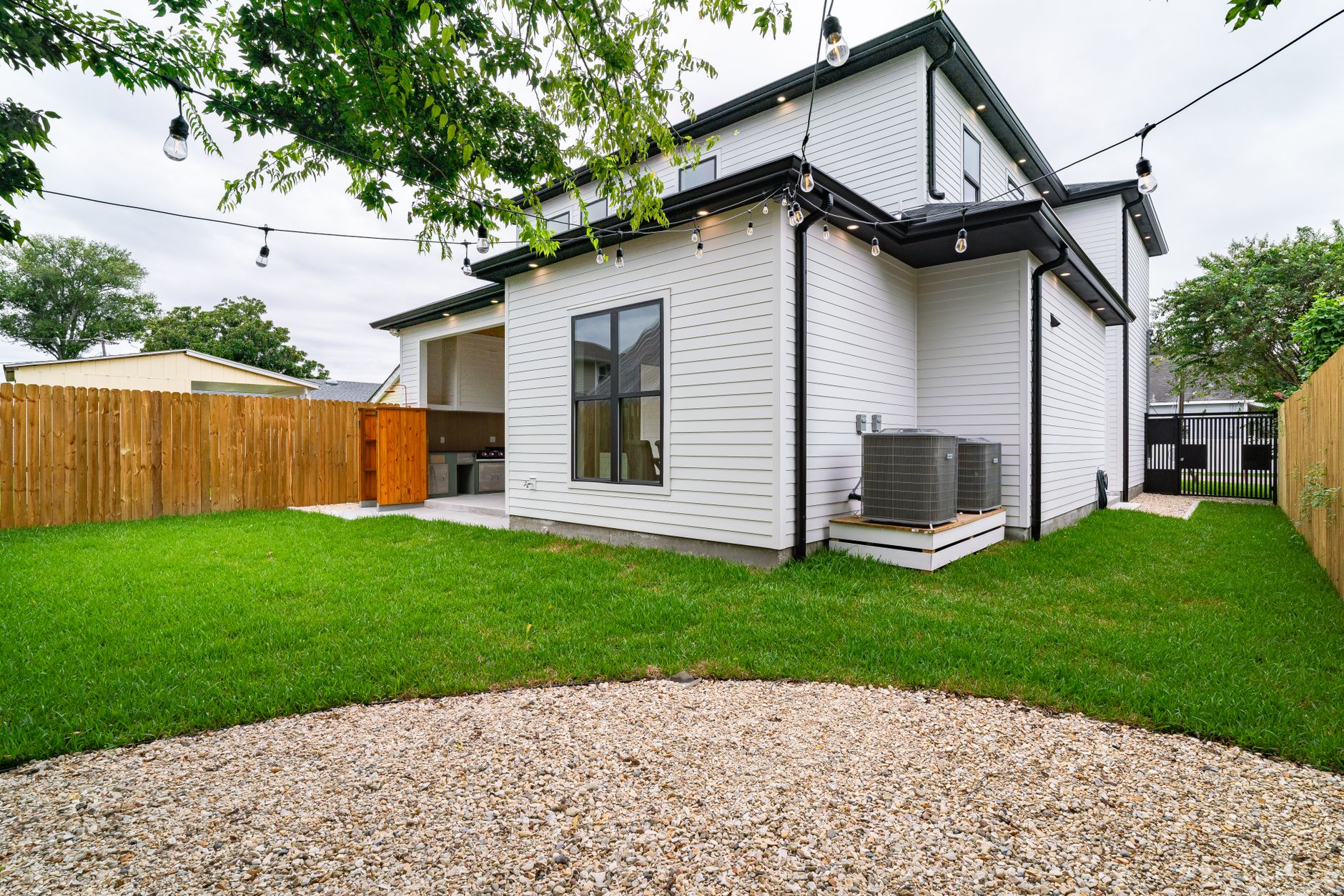
Louisiana requires a pool barrier of at least 4 feet, with no gaps or footholds a child could use to climb over. The gate must also close and latch on its own. This minimum applies to residential pools deeper than about 2.9 feet under the Louisiana Administrative Code, Title 51.
That 4-foot number is a floor, not a suggestion, and most pool owners choose a taller fence anyway for added privacy around the water. A 48 or 60-inch aluminum panel with narrow picket spacing meets the no-foothold rule while still letting you see the pool from inside the house. Daycare facilities and some commercial pools face stricter barrier rules, so always confirm the exact requirement with your local Safety and Permits office before installation.
For a closer look at how aluminum and wrought iron perform around a pool deck, see our buyer’s guide to fence materials.
Commercial and industrial properties in New Orleans can generally reach 8 feet, and boundaries next to an industrial district can go up to 10 feet under city zoning. Most business owners choose 6 to 8-foot wrought iron or heavy-gauge aluminum for the added deterrent effect.
A taller fence around a parking lot, storage yard, or loading area signals that the property is watched and not an easy target. Wrought iron in the 6 to 8-foot range pairs well with automatic gates and camera systems for businesses that need both security and a presentable street view. Retail storefronts and offices in mixed-use areas often stay closer to 6 feet to keep a welcoming appearance while still marking the boundary clearly. These maximums come from CZO §21.6.N.1, the same section that sets the citywide fence height baseline.
Our post on elegant wrought iron fences for homes and businesses walks through style options that hold up well at these taller heights.
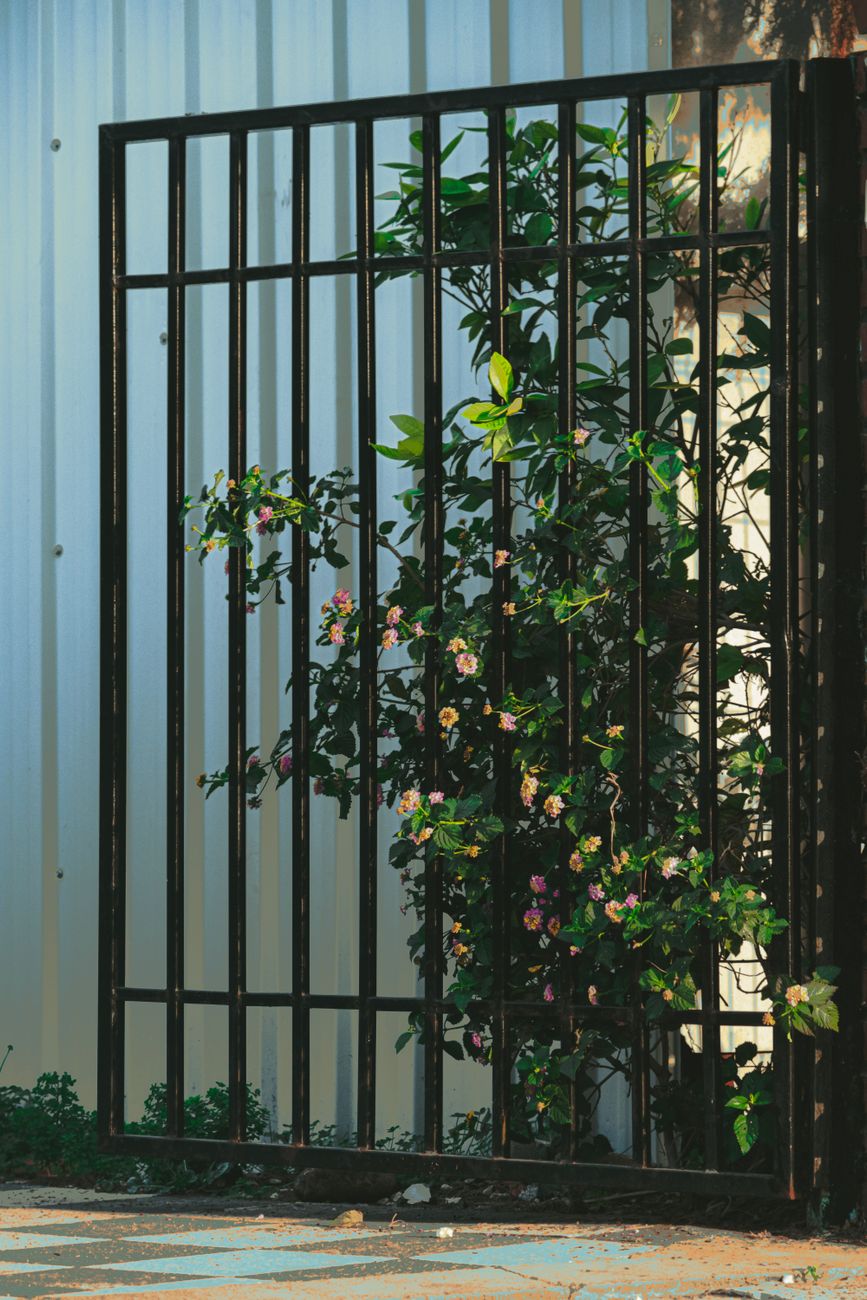
Beyond city code, your fence height should account for your HOA’s rules, your neighbors’ sightlines, and slope changes across your lot. It should also match what the fence actually needs to do, whether that’s framing a garden or containing a dog. A short conversation with your HOA or a licensed surveyor before ordering panels can prevent a costly redo.
Some New Orleans subdivisions apply their own height and style rules on top of city zoning, so a fence that passes city code can still violate an HOA covenant. Sloped yards affect how a fence reads visually too. A single 6-foot height on a hill can look uneven, so a stepped installation may need slightly different panel heights from section to section.
Think about function as well. A fence meant to contain a small dog only needs to be tall enough that the dog cannot jump it. A fence meant to block a neighbor’s second-story view needs considerably more height. Our guide to modern fence design ideas has more on balancing height with the overall look of your property.
New Orleans requires front yard fences to be open-style under CZO §21.6.N.1, with a citywide maximum of 8 feet (7 feet in historic districts). Some neighborhoods, like Lake Vista and Lake Terrace, cap front yard fences much lower, so confirm the exact limit for your zoning district with Safety and Permits.
In most New Orleans zoning districts, side and rear yard fences can reach 8 feet, or 7 feet in historic districts, under CZO §21.6.N.1. Some neighborhoods, including Lake Vista and Lake Terrace, cap rear yards at 5 feet, so verify your district’s limit with Safety and Permits.
Louisiana Administrative Code, Title 51 (2026), requires a pool barrier of at least 4 feet for residential pools deeper than about 2.9 feet. The barrier must also have a self-closing, self-latching gate and no footholds a child could climb.
Orleans Parish generally requires a permit for fence installation, and taller fences or those near a historic district often need additional review from Safety and Permits or the HDLC. Confirm your specific height and setback requirements before ordering materials.
Yes. An HOA covenant can set a stricter height or style limit than New Orleans zoning requires, and you generally must follow the tighter of the two rules. Check your HOA documents alongside city code before finalizing your fence height.
A 4-foot fence stops most small dogs, while larger or more athletic breeds usually need at least 5 to 6 feet to prevent jumping. Wrought iron and aluminum panels in the 48 to 60-inch range from the Bennington line cover most residential dog owners.
Choosing the right height keeps your fence legal, functional, and good-looking from day one. That might mean a shorter aluminum panel out front or a taller wrought iron section around the pool, depending on your zoning district. Big Easy Fence Supply stocks the Bennington aluminum line and wrought iron panels in the heights New Orleans properties actually need. That includes backing from our 24-Hour Fence Replacement Guarantee and Fence Now, Pay Later financing.
Call 504-608-7730 today for a free estimate on the fence height that fits your property.
In New Orleans, DIY fence installation can save 30 to 50 percent on labor but demands extra care with clay soil, drainage, and property line accuracy. Professional installation costs more upfront but usually means straighter posts, faster completion, and someone to call if a section shifts. The right choice depends on your soil, your fence material, and how much physical labor you want to take on.
Standing in the yard with a post hole digger in hand, the DIY vs professional fence installation decision looks simpler than it actually is. Anyone can watch a video and set a post in concrete. What’s harder to judge from a video is how your particular yard, your particular soil, and your particular property lines will behave once panels and gates are added to the mix.
That’s the gap this guide fills. We work with homeowners across New Orleans on both aluminum and wrought iron fencing, and get asked the DIY-or-hire question on nearly every estimate call. Visit Big Easy Fence Supply to see the materials available, or keep reading for an honest look at what each installation path really involves.
Both materials require digging footings roughly 24 inches deep, setting posts in concrete, and attaching panels with a level so the entire line stays straight across the run. Getting this base step wrong is the most common reason a fence fails early.
Aluminum panels are lighter and use bolt-together hardware, which is why some homeowners tackle smaller residential runs themselves. Wrought iron is heavier and often welded or fitted section by section, which raises the physical difficulty and the margin for error. A slightly uneven aluminum panel is usually a quick fix, but a wrought iron section set at the wrong angle is much harder to correct once the concrete cures.
A basic DIY setup requires a post hole digger or gas auger, a four-foot level, mason’s line to keep the run straight, and quick-set concrete. Renting an auger for larger jobs saves hours of manual digging but adds another cost most homeowners forget to budget for. Safety gear matters too, since digging in New Orleans clay after rain can strain your back and shoulders fast.
Browse aluminum fencing or wrought iron fencing options to see which style fits your property and your comfort level with the work.
DIY installation typically saves 30 to 50 percent of the total project cost because labor makes up roughly $15 to $40 of every linear foot on a professional quote. On a 150-foot backyard fence, that gap can add up to thousands of dollars.
The catch is that real savings shrink once you count tool rentals, wasted material, and the weekends spent digging in New Orleans heat. Permit fees and survey costs apply either way, so they don’t change the comparison much. Material choice affects the math too, since aluminum and wrought iron both carry a higher upfront cost than some fencing types, so getting the quantity and layout right the first time matters more.
Timeline is the other trade-off worth weighing. A professional crew usually finishes a 150-foot residential fence in one to two days, including cleanup. DIYers typically need three to six weekends for the same run once you factor in digging, letting concrete cure, and fitting panels around a work schedule. Humidity slows concrete curing further, so posts set on a Saturday may not be ready to carry panel weight until midweek.
Our fence materials buyer’s guide breaks down how aluminum and wrought iron compare on cost and upkeep if you’re still deciding between them.

New Orleans sits on clay-heavy soil that expands when wet and contracts when dry, especially during the region’s long rainy stretches. That constant movement is one of the top reasons DIY fences lean or heave within a year or two.
Heavy rainfall saturates the ground quickly, and if post holes aren’t dug deep enough or the concrete mix isn’t right for local conditions, posts lose their grip over time. Drainage swales and low spots along a property line make the problem worse, since water tends to pool right where fence posts sit.
Standard 24-inch footings that work fine in sandy or loamy soil often need extra depth or wider concrete collars in heavier clay to resist the seasonal swelling and shrinking. Skipping that adjustment is a common reason DIY posts start leaning within the first rainy season.
Wind is the other factor DIYers underestimate. Hurricane season brings sustained gusts that test every post and connection point on a fence, and shallow or poorly set posts are usually the first thing to fail. If your yard has drainage issues or sits near a ditch, talk to someone before you commit to a DIY layout so the plan accounts for how water actually moves through your property. Contact our team for a free estimate and a second opinion on your soil conditions.
Louisiana law presumes a fence built directly on a shared boundary is a common fence, so an inaccurate line can turn a simple project into a dispute with a neighbor. A licensed surveyor is the only reliable way to confirm your exact boundary before any posts go in the ground.
Most residential fence projects in Orleans Parish also require a permit, whether you install the fence yourself or hire it out. Professional installers typically build the survey and permit steps into their process. DIYers have to arrange both on their own and budget for the extra time and fees.
Our post on how long aluminum fencing lasts in New Orleans covers more on what proper installation protects against over time.
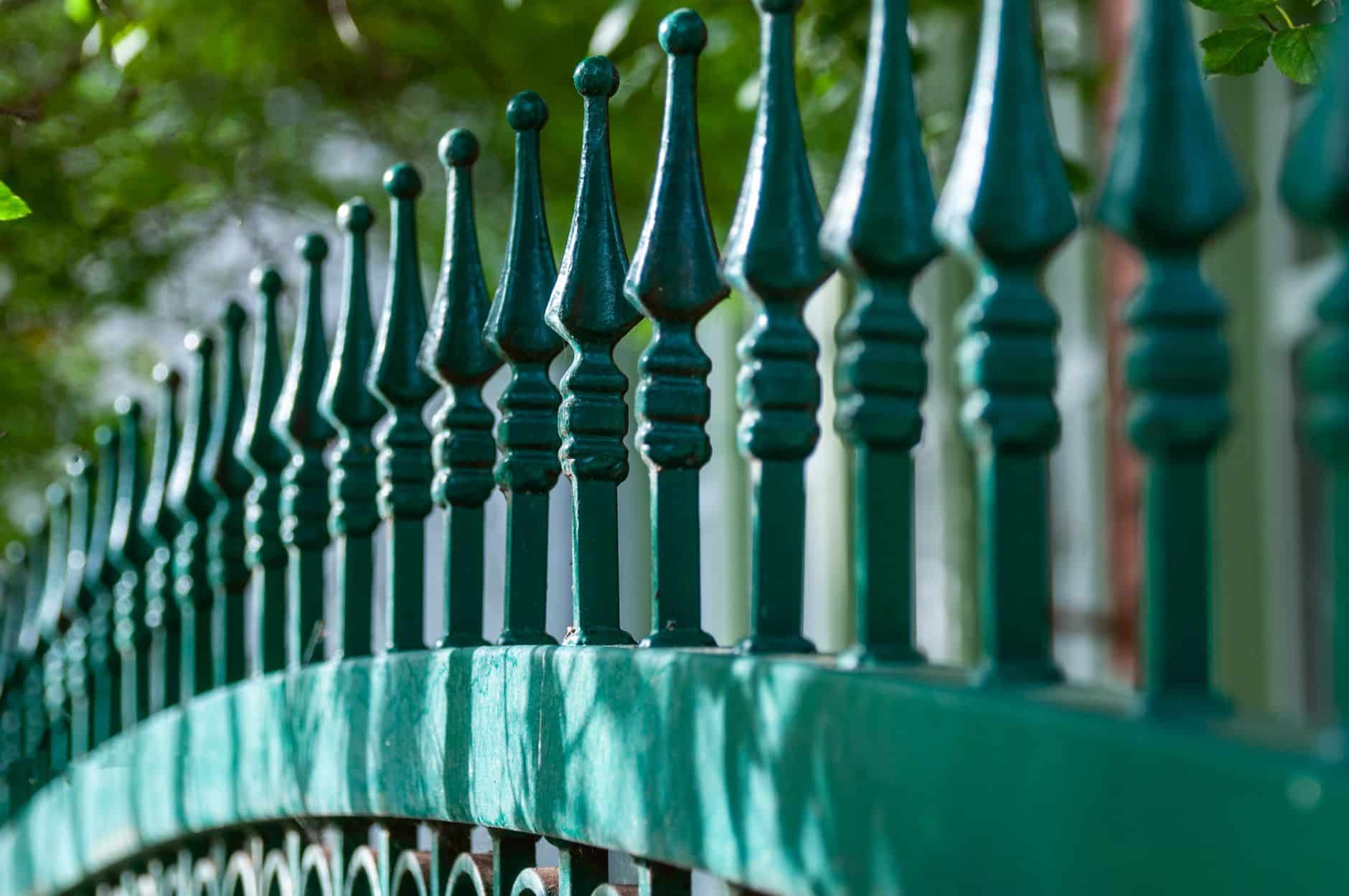
Professional installation is the safer call for wrought iron, sloped or irregular yards, and gates with complex hardware. It’s also worth hiring out if soil or drainage issues have already caused problems for a previous fence on your property, since a crew can address the root cause.
A trained crew brings the equipment to dig consistent, properly angled footings and the experience to adjust for wet or unstable ground on the spot. They also carry the accountability that DIY doesn’t offer if a post shifts after the first storm season.
DIY still makes sense for shorter, straightforward aluminum runs on flat, well-drained ground where you’re comfortable with manual labor spread over a few weekends. Call 504-608-7730 if you want a professional to walk your property and tell you honestly whether it’s a good DIY candidate.
Most residential fence projects in Orleans Parish require a permit before construction begins, whether you install it yourself or hire a contractor. Skipping this step can lead to fines or forced changes later. Check with the city’s permitting office before digging any post holes.
Aluminum fence installation typically runs $20 to $60 per linear foot installed, while wrought iron often runs higher due to material weight and fabrication time. Pricing depends on height, style, and gate count. Big Easy Fence Supply provides free estimates based on your exact property.
It’s possible on a short, simple run, but wrought iron is heavier and less forgiving than aluminum if a section is set unevenly. Most homeowners find professional installation worth it for wrought iron because mistakes are expensive to correct once the concrete sets.
Clay-heavy soil around New Orleans expands and contracts with moisture, which loosens improperly set posts over time. Heavy rain and poor drainage speed up this movement. Deeper footings and the right concrete mix reduce the risk of leaning or heaving posts.
A licensed surveyor is the most reliable way to confirm your exact boundary before you dig. Louisiana treats a fence built on a shared line as a common fence, so an inaccurate placement can create a dispute with your neighbor down the road.
Big Easy Fence Supply supplies aluminum and wrought iron fencing and offers full installation, repair, and gate services backed by a 24-Hour Fence Replacement Guarantee. We also offer Fence Now, Pay Later financing for homeowners who want professional installation without paying it all upfront.
Weighing DIY against professional installation comes down to honest math on savings, time, soil conditions, and how much risk you’re willing to take on with property lines and permits. Neither path is wrong. The smarter choice is simply the one that matches your yard, your material, and your tolerance for spending a few weekends with a post hole digger.
Big Easy Fence Supply has helped homeowners across New Orleans work through exactly this decision on more than 1,500 completed projects. Whether you’re ready to hire a crew or just need materials and an honest opinion on your soil, our team can point you in the right direction.
Call 504-608-7730 today for a free estimate, or reach out through our Contact page to get your fence project started the right way.
If you’re a New Orleans homeowner or property manager considering a new fence, one of the most important questions you can ask is simple: how long will it actually last? Given our city’s relentless humidity, Gulf Coast salt air, and the occasional hurricane threat, not every fencing material stands the test of time. Aluminum fencing, however, is a different story.
At Big Easy Fence Supply, we’ve completed 1,500+ fencing projects across the New Orleans area, and aluminum fencing consistently outperforms other materials in Louisiana’s demanding climate. Here’s everything you need to know about aluminum fence lifespan, what affects it, and how to keep yours performing for decades.
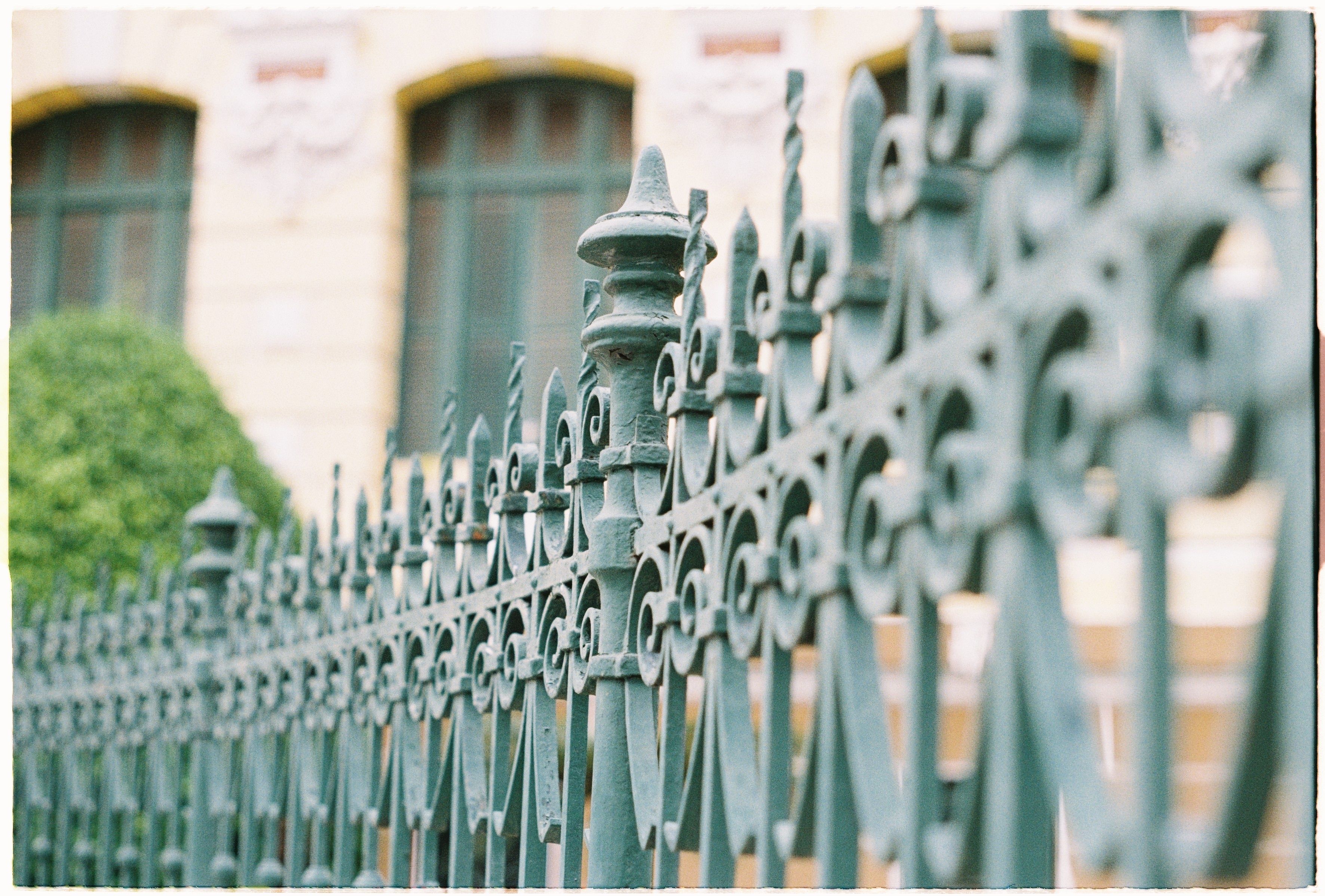
A professionally installed, high-quality aluminum fence typically lasts 30 to 50 years or more with minimal maintenance. Unlike wood, which rots and warps; vinyl, which can crack and fade under intense UV exposure; or even wrought iron fencing, which is prone to corrosion in moist environments, aluminum holds its structural integrity decade after decade.
The longevity stems from three core properties: aluminum does not rust, does not rot, and its powder-coated finish resists chipping, peeling, and UV degradation. For New Orleans property owners, this translates directly into a low-hassle, long-term investment.
New Orleans presents one of the most challenging climates for outdoor structures in the United States. Average relative humidity hovers above 70% year-round. Salt-laden air drifts in from Lake Pontchartrain and the Gulf Coast. Summer brings sustained heat and intense UV radiation. Then there’s hurricane season, which delivers high winds, driving rain, and storm debris.
Many fencing materials simply cannot hold up under these conditions. Untreated wood rots within a few years in this humidity. Wrought iron corrodes without regular painting and rust treatment, adding cost and labor over time. Chain link loses its galvanized coating in coastal air. Aluminum, by contrast, is inert to moisture and does not oxidize the way iron-based metals do, making it the right material for the right place.
Our aluminum fencing is engineered for exactly this kind of environment. Here is what gives aluminum its exceptional longevity in Louisiana’s Gulf Coast conditions:
While aluminum is inherently durable, its actual lifespan in your yard depends on several factors within your control.
This is the single most important factor. Posts must be set in concrete at the correct depth for New Orleans’ soil conditions, which are notoriously soft and subject to subsidence. Panels must be correctly aligned and fastened. Our team of 74+ trained professionals handles this precision work on every project, and every installation is backed by our 24-Hour Fence Replacement Guarantee. If there is a problem after installation, we address it fast.
Not all aluminum fencing is the same. Thicker-gauge aluminum and higher-alloy materials hold up better under mechanical stress. When you browse our fence products, you’ll find commercial and industrial-grade options designed for higher loads alongside residential lines built for curb appeal and everyday security.
A standard powder coat protects for many years. A premium powder coat, properly cured and applied, will outlast the warranty period by a significant margin. Ask about the coating specifications when selecting your fence style.
Aluminum needs very little attention, but what it does need, it needs consistently. An annual wash with mild soap and water removes salt, pollen, and Gulf Coast grime before they can accumulate and work against the finish. No painting, no rust treatment, no sealing required.
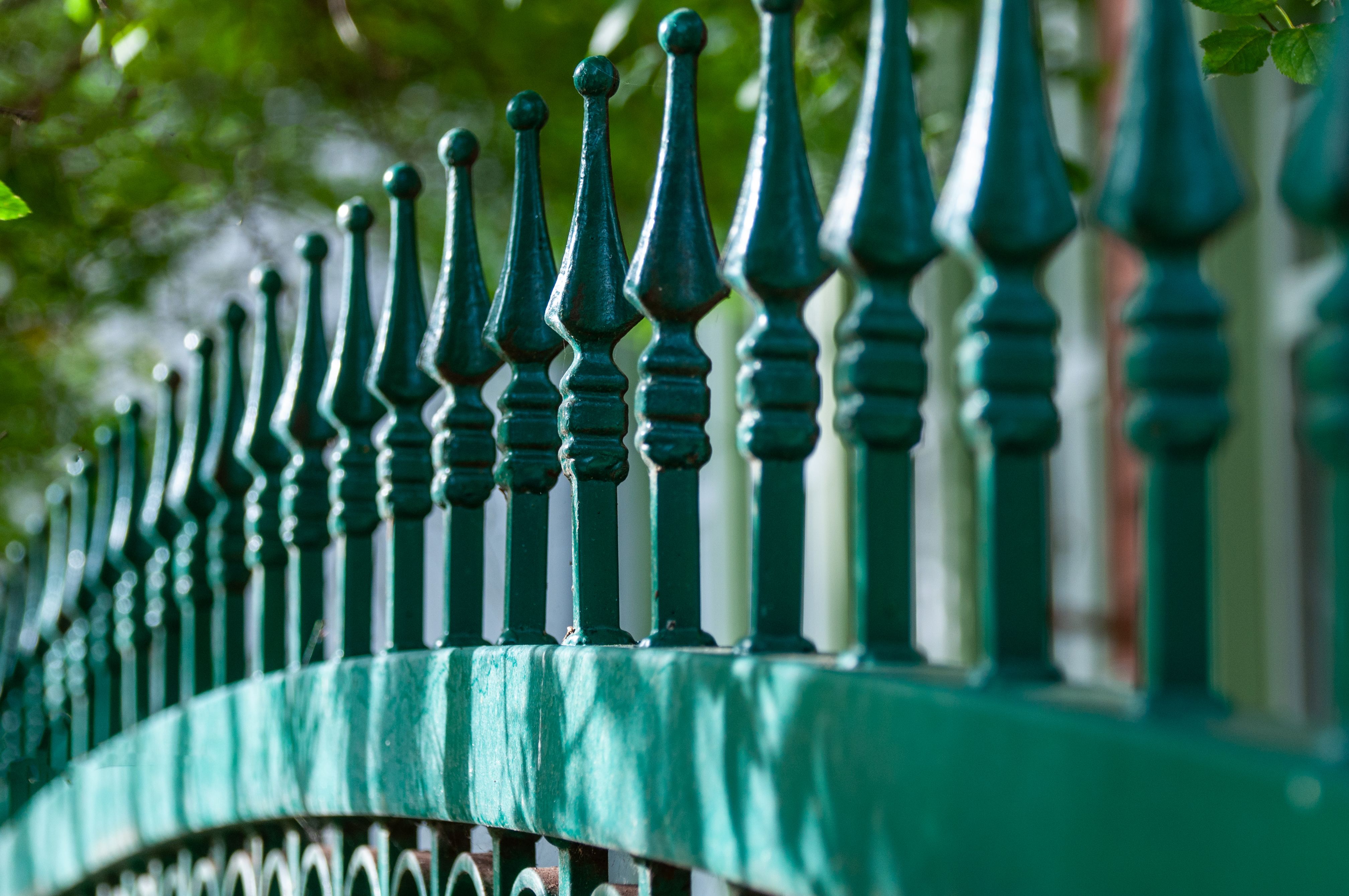
Maintaining your aluminum fence in a Gulf Coast environment is straightforward. Follow these steps to protect your investment and maximize your fence’s lifespan:
If your fence has been damaged by a storm or an accident, don’t wait. Our team provides fast fence repair, and our 24-Hour Fence Replacement Guarantee means you’re covered when an issue with our workmanship arises. Contact us at 504-608-7730 during business hours (Monday through Friday, 8:00 AM to 3:00 PM) and we’ll get you taken care of quickly.
Aluminum fencing carries a higher upfront cost than wood or chain link, but the math over 30 to 50 years tells a very different story. Wood fences in New Orleans typically need repainting every 2 to 3 years and often require full replacement within 10 to 15 years due to rot. Wrought iron requires annual rust treatment and periodic repainting. Aluminum requires almost none of that.
When you factor in zero repainting costs, zero rust treatments, and a lifespan two to three times longer than wood, aluminum’s total cost of ownership is significantly lower. We also offer “Fence Now, Pay Later” financing so you can protect your property with a premium fence today without straining your budget.
For specific styles and heights, explore our full range of residential aluminum fencing, from elegant ornamental designs to privacy-forward configurations built for New Orleans yards.
A properly installed aluminum fence in New Orleans can last 30 to 50 years or more. Aluminum does not rust or corrode in humid or coastal environments, making it one of the best long-term choices for Gulf Coast properties.
No. Aluminum does not rust. Unlike wrought iron or steel, aluminum is not an iron-based metal, so it is immune to rust. Salt air from the Gulf Coast and Lake Pontchartrain will not degrade a properly powder-coated aluminum fence.
Aluminum fences with a quality powder-coat finish do not need to be painted. The powder-coat finish resists chipping, peeling, and UV degradation for the life of the fence. The only maintenance required is an annual wash with mild soap and water.
Big Easy Fence Supply’s 24-Hour Fence Replacement Guarantee means that if there is a workmanship issue with your newly installed fence, we will address it within 24 hours. It is one of the signature commitments that sets us apart from other New Orleans fence contractors.
New Orleans homeowners and business owners deserve a fence that can handle everything this city throws at it, from sweltering summers to hurricane-season storms. Aluminum fencing, installed by an experienced team with the right equipment and local knowledge, delivers exactly that.
Big Easy Fence Supply has completed 1,500+ projects across New Orleans with a team of 74+ professionals and 6+ awards and certifications backing our work. We offer free estimates, flexible “Fence Now, Pay Later” financing, and our signature 24-Hour Fence Replacement Guarantee on every installation.
Request your free estimate today or call us directly at 504-608-7730. We’re available Monday through Friday, 8:00 AM to 3:00 PM.
A fence is not just a functional structure that provides privacy and security; it can also enhance the overall aesthetic of your property.
However, over time, fences can become worn out and lose their charm. Thankfully, there are simple and effective ways to spruce up your fence and make it look nice again.
If you’re wondering how to make your fence look nice, you’ve come to the right place. With a little creativity and some easy tips, you can give your fence a makeover that will impress your neighbors and make your outdoor area more inviting.
Learn the various techniques and ideas to help you achieve a stunning and visually appealing fence. Get ready to transform your fence into a beautiful asset that complements your home and adds value to your property.
The first step in making your fence look nice is to clean it thoroughly. Use a pressure washer or a scrub brush with a mixture of water and mild detergent to remove dirt, grime, and any mold or mildew.
After cleaning, inspect the fence for any damages or loose boards. Repair or replace them as needed to ensure a sturdy and visually appealing fence.
One of the easiest and most impactful ways to transform the look of your fence is by applying a fresh coat of paint or stain.
Choose a color that complements your home’s exterior and apply it evenly to the entire fence. Not only will this give your fence a new lease on life, but it will also provide protection against the elements.
Adding plants and greenery to your fence can instantly make it look more inviting and aesthetically pleasing. Consider hanging flower baskets or installing planter boxes along the length of the fence.
Choose flowers or plants that thrive in your climate and require minimal maintenance. This will not only enhance the appearance of your fence but also add a touch of nature to your outdoor space.
To further enhance the look of your fence, consider installing decorative elements such as post caps, trellises, or decorative panels.
These additions can add a touch of elegance and uniqueness to your fence. Choose elements that complement the style of your home and the overall theme of your outdoor space.
Adding lighting to your fence can create a warm and welcoming ambiance, especially during the evening hours.
Install solar-powered lights along the length of the fence or place lanterns strategically to highlight certain areas.
Not only will this make your fence look nice, but it will also improve the safety and security of your property.
Lastly, to keep your fence looking nice, it’s important to maintain it regularly. Trim any overgrown vegetation that may be encroaching on the fence.
Remove any debris or leaves that accumulate near the base. Inspect for any signs of damage or wear and address them promptly. By taking care of your fence, you can ensure that it continues to look nice for years to come.
One of the primary advantages of fence design is its ability to enhance the overall appearance of your property. A fence is not just a functional structure; it can also serve as a decorative element that adds character and style to your home.
With various materials, colors, and styles available, you have the freedom to choose a fence design that complements the architectural style of your property.
Whether you prefer a classic picket fence or a modern and sleek design, the right fence can transform the exterior of your home and make it visually appealing.
Another advantage of fence design is the added curb appeal it brings to your property. Curb appeal refers to the attractiveness of your home from the street, and a well-designed fence can significantly contribute to this.
Potential buyers or visitors will be drawn to a property with a well-maintained and aesthetically pleasing fence. It creates a good first impression and sets the tone for the rest of the property. A beautiful fence can increase the value of your home and make it stand out in the neighborhood.
 The first step in creating a creative fence design is to choose the right material. Wood, metal, and vinyl are popular options, each with its own unique characteristics.
Wood gives a natural and rustic look, while metal adds a modern and industrial touch. Vinyl is a low-maintenance option that comes in various colors and styles. Consider your personal style and the overall theme of your property when selecting the material.
Once you have chosen the material, it’s time to think about adding decorative elements to your fence. This can include anything from ornamental post caps and finials to decorative panels and lattice work.
These small details can make a big difference in the overall appearance of your fence.
Don’t be afraid to experiment with colors when designing your fence. A simple coat of paint can transform a plain fence into a vibrant and eye-catching feature.
Consider using bold and contrasting colors to create visual interest. You can also use stencils or murals to add unique patterns or designs to your fence.
One way to make your fence design stand out is by incorporating greenery. You can attach planter boxes or hanging pots to your fence and fill them with colorful flowers or lush green plants.
This will not only add a touch of nature to your outdoor space but also soften the look of the fence.
Don’t limit yourself to traditional fence designs. Think outside the box and get creative with the shape and structure of your fence.
Consider using unconventional materials such as recycled materials or repurposed items to create a one-of-a-kind fence. You can also experiment with different heights and angles to add visual interest.
Lastly, don’t forget about lighting. Adding outdoor lighting to your fence can create a magical ambiance and highlight its design features. Install solar-powered lights along the top or sides of your fence to create a warm and inviting atmosphere during the evening hours.
When it comes to choosing a fence supplier, Big Easy Fence Supply stands out as the top choice for obtaining excellent results. With their extensive range of high-quality fences and exceptional customer service, they ensure that customers receive the best products and services for their fencing needs.
Whether it’s for residential or commercial purposes, Big Easy Fence Supply offers a wide selection of fences that are durable, aesthetically pleasing, and built to last.
Their team of experts is knowledgeable and experienced in providing expert advice and guidance to help customers make the right choice for their specific requirements. When you choose Big Easy Fence Supply, you can trust that you will receive an excellent result for your fences.
Are you looking to update your outdoor space with a modern and stylish fence? Finding the perfect fence design can be a daunting task with so many options available.
However, a modern fence can completely transform the look and feel of your property, adding both aesthetic appeal and functionality.
The world of fence design has evolved significantly in recent years, offering countless creative and contemporary options to choose from. Whether you’re seeking privacy and security, or simply want to enhance the visual appeal of your outdoor space, there is a modern fence design out there to suit your needs.
Investing in a modern fence design not only adds value to your property but also acts as a statement piece that sets your home apart. From sleek and minimalist designs to unique materials and finishes, the possibilities are endless.
In this article, we will explore some of the best modern fence design ideas that will inspire you to transform your outdoor space into a modern oasis.
Homeowners should consider modern fence design ideas for several reasons.
Firstly, modern fence designs can enhance the overall aesthetic appeal of a home and add a contemporary touch to the exterior. This can significantly increase the curb appeal and value of the property.
In addition, modern fence designs often offer improved functionality and durability compared to traditional options. They can incorporate innovative materials, such as composite or metal, that provide better resistance to weather elements and require less maintenance.
Moreover, modern fence designs can offer increased privacy and security, with features like taller heights, sleek designs, and advanced locking mechanisms.
Therefore, homeowners seeking a stylish, practical, and long-lasting fencing solution should definitely consider modern design ideas.
When it comes to modern fence designs, there is a wide range of materials to choose from. Whether you are looking for a sleek and minimalistic design or a more traditional and rustic look, there is a material out there to suit your preferences. Let’s explore some of the popular materials for modern fence designs.
Aluminum fences have become increasingly popular in recent years due to their durability and low maintenance requirements. They are lightweight, rust-resistant, and can be easily customized to fit any design aesthetic. Aluminum fences are also available in a variety of colors to match the overall look of your property.
 Wood fences are a classic choice and can easily be adapted to a modern design. They provide a warm and natural feel to any outdoor space.
Cedar and redwood are popular choices for modern wood fences due to their resistance to decay and insects. Wood fences can be stained or painted to match your preferred color scheme.
Vinyl fences are known for their durability and low maintenance. They are resistant to rotting, warping, and cracking, making them ideal for modern designs. Vinyl fences are available in a range of styles and colors, allowing you to create a modern look that complements your property.
Composite fences are made from a combination of wood fiber and plastic, offering the best of both worlds. They provide the natural look of wood while being highly durable and low maintenance. Composite fences are available in various colors and styles, allowing you to create a modern design that suits your taste.
Steel fences are a popular choice for those seeking a modern and industrial look. They can be customized with different types of coatings to prevent rust and corrosion. Steel fences are known for their strength, security, and longevity, making them a practical choice for modern designs.
Glass fences are the epitome of modern design, providing a sleek and contemporary look to any outdoor space. They are transparent, allowing for unobstructed views without sacrificing privacy and security. Glass fences are typically made with tempered glass, which is highly durable and resistant to breakage.
When choosing the material for your modern fence design, consider factors such as durability, maintenance requirements, and the overall style you want to achieve. Ultimately, the material you choose should complement your property’s aesthetics while serving its intended purpose. By selecting the right material, you can create a modern fence design that enhances your outdoor space and adds value to your property.
If you’re looking to enhance your outdoor space with a fence while staying mindful of the environment, here are some sustainable and eco-friendly modern fence design ideas to consider:
Bamboo is a highly sustainable and renewable material that grows quickly, making it an excellent choice for eco-conscious homeowners. Bamboo fences are not only eco-friendly but also provide a stylish and natural look to any outdoor space. With its durability and resistance to rot and pests, bamboo fencing is a popular choice for creating privacy or adding a touch of tropical charm to your yard.
One of the best ways to incorporate sustainability into your fence design is by using repurposed materials. Salvaged wood, old doors, and even metal scraps can be used creatively to construct a unique and eco-friendly fence. Not only does this approach reduce waste by giving new life to discarded materials, but it also adds character and charm to your outdoor area.
Living fences, also known as hedge fences, are an excellent eco-friendly option that promotes biodiversity and enhances the natural beauty of your property. By planting fast-growing, evergreen shrubs or climbing plants, you can create a living fence that provides privacy, reduces noise, and contributes to a healthier environment. Additionally, living fences can act as windbreakers and provide habitat for birds and other wildlife.
Recycled plastic fencing is a sustainable alternative to traditional wood or metal fences. Made from post-consumer recycled plastic, this type of fencing is durable, low-maintenance, and resistant to rot, insects, and fading. By opting for recycled plastic fencing, you not only conserve natural resources but also prevent plastic waste from ending up in landfills or oceans.
Combining a fence with a vertical garden is an innovative way to maximize your outdoor space and add a touch of greenery while reducing your carbon footprint. By incorporating planters or trellises into your fence design, you can grow herbs, vegetables, or colorful flowers. Vertical gardens not only enhance the aesthetic appeal of your property but also provide environmental benefits, such as improved air quality and energy conservation.
For those looking to incorporate sustainable technology into their fence design, solar-powered fencing is an excellent choice. These fences are equipped with built-in solar panels that harness the sun’s energy during the day to power lights or other features, such as security cameras. By utilizing renewable energy, solar-powered fencing minimizes reliance on electricity from the grid and reduces carbon emissions.
Well-designed modern fences have enduring appeal and value in contemporary living spaces for several reasons.
Firstly, they provide privacy and security, creating a sense of seclusion and peace within the boundaries of a property. This is particularly important in urban areas where homes are in close proximity to each other.
Secondly, modern fences can enhance the aesthetic appeal of a space, adding a stylish and contemporary touch to the overall design. They can be made from a variety of materials such as metal, wood, or glass, allowing homeowners to choose a style that suits their individual tastes and complements the architectural features of their property.
Lastly, modern fences can also act as a windbreak, effectively reducing noise pollution and creating a more peaceful and relaxing environment. Overall, well-designed modern fences are not only functional but also add value to contemporary living spaces.
If you’re looking for a modern fence to enhance your yard or garden, Big Easy Fence Supply offers professional and affordable installation services.
We specialize in providing high-quality fences made from durable materials such as aluminum, wood, and vinyl.
Our experienced team of installers can help you select the perfect modern fence for your space. Contact us today to learn more about our fencing services!
Elegant wrought iron fences offer a perfect balance of security, durability, and timeless design for both residential and commercial properties. This guide explores their benefits, styles, maintenance, and why they remain a top fencing choice.
When it comes to combining security with sophistication, few fencing options rival the enduring appeal of wrought iron. Known for its strength, intricate craftsmanship, and timeless aesthetic, wrought iron fencing continues to be a preferred choice for property owners who value both protection and curb appeal.
At Big Easy Fence Supply, we understand the importance of investing in fencing solutions that not only secure your space but also elevate its overall appearance.
Whether you’re protecting a residential property or enhancing a commercial exterior, wrought iron fences provide a refined and reliable solution that stands the test of time.
 Wrought iron fencing has long been associated with elegance and durability, and for good reason. Unlike other materials that may deteriorate over time, wrought iron is built to last and offers a level of strength that is difficult to match.
One of the primary advantages is its exceptional durability. Properly maintained wrought iron fences can last for decades without compromising their structural integrity. This makes them a cost-effective investment in the long run, especially for property owners seeking long-term solutions.
Additionally, wrought iron fences offer unmatched security. Their solid construction and customizable height options act as a strong deterrent against unauthorized access. This makes them ideal for both homes and businesses where safety is a top priority.
Another key benefit is their aesthetic versatility. From classic scrollwork to modern minimalist designs, wrought iron can be customized to suit any architectural style.
Traditional wrought iron fences often feature ornate patterns, decorative finials, and intricate scrollwork. These designs are perfect for historic homes, luxury estates, and properties that aim to maintain a timeless appearance. The craftsmanship involved in these styles adds a sense of prestige and sophistication.
For contemporary properties, sleek and simple wrought iron designs are increasingly popular. Clean lines, geometric patterns, and understated finishes create a modern look while still providing the strength and durability wrought iron is known for.
One of the standout features of wrought iron fencing is its ability to be customized. Property owners can incorporate unique elements such as monograms, logos, or decorative panels. This is particularly beneficial for businesses looking to reinforce brand identity through exterior design.
Security is one of the most critical considerations when choosing a fence, and wrought iron excels in this area. Its strength makes it resistant to impact, bending, or forced entry. Unlike wood or vinyl, it cannot be easily broken or cut.
For residential properties, wrought iron fences provide peace of mind without creating a closed-off or unwelcoming appearance. The open design allows visibility while maintaining a secure boundary.
For commercial properties, this visibility is even more valuable. Business owners can monitor activity around their premises while ensuring that the property remains protected. This balance between openness and security is a key reason why wrought iron is widely used in commercial fencing.
 A well-designed wrought iron fence does more than provide security—it significantly enhances the visual appeal of a property. First impressions matter, and a beautifully crafted fence can elevate the entire look of your home or business.
Real estate professionals often note that properties with high-quality fencing tend to attract more interest from potential buyers. Wrought iron, in particular, is associated with luxury and permanence, making it a desirable feature for prospective buyers.
In commercial settings, an elegant fence can create a strong brand image. It communicates professionalism, attention to detail, and a commitment to quality—all of which can influence customer perception.
One of the defining characteristics of wrought iron fencing is its longevity. Unlike materials that may warp, crack, or rot over time, wrought iron maintains its strength and shape even under harsh weather conditions.
With proper care, these fences can withstand rain, sun exposure, and temperature fluctuations. Protective coatings and finishes further enhance their resistance to rust and corrosion.
While initial installation costs may be higher compared to other materials, the long-term savings on repairs and replacements make wrought iron a smart investment.
Maintaining a wrought iron fence is relatively straightforward, but regular upkeep is essential to preserve its appearance and functionality.
Routine inspections can help identify early signs of rust or damage. Addressing these issues promptly prevents them from spreading and causing more significant problems.
Cleaning the fence periodically removes dirt and debris that may contribute to corrosion. Applying a protective coating or repainting when necessary helps maintain its finish and extends its lifespan.
Compared to wood fencing, which requires frequent staining or sealing, wrought iron maintenance is minimal and more manageable over time.
When comparing fencing options, wrought iron consistently stands out for its combination of strength and style.
Wood fences offer a natural look but require frequent maintenance and are susceptible to weather damage. Vinyl fences are low-maintenance but lack the strength and premium appearance of wrought iron.
Chain-link fencing is cost-effective but does not provide the same level of aesthetic appeal or perceived value. Wrought iron, on the other hand, delivers both functionality and elegance, making it a superior choice for many property owners.
Proper installation is crucial to maximizing the benefits of a wrought iron fence. Factors such as terrain, property layout, and local regulations must be taken into account.
Professional installation ensures that the fence is securely anchored and properly aligned. This not only enhances its durability but also ensures that it meets safety and compliance standards.
Working with experienced providers like Big Easy Fence Supply helps ensure that every aspect of the installation process is handled with precision and expertise.
Wrought iron is also a sustainable fencing option. It is highly recyclable and can be repurposed without losing its quality. This makes it an environmentally responsible choice for property owners looking to reduce their environmental impact.
Additionally, its long lifespan means fewer replacements and less material waste over time, further contributing to sustainability.
Elegant wrought iron fences offer a unique combination of durability, security, and visual appeal that few materials can match. Whether you’re enhancing a residential property or securing a commercial space, wrought iron provides a long-lasting solution that adds both value and sophistication.
At Big Easy Fence Supply, we specialize in delivering high-quality wrought iron fencing solutions tailored to your specific needs. If you’re ready to upgrade your property’s security and style, our team is here to help you find the perfect design and ensure a seamless installation process.
Wrought iron fences are stronger, more durable, and offer a timeless aesthetic that other materials cannot match.
They have a higher upfront cost but provide excellent long-term value due to durability and low maintenance.
They can rust if not properly maintained, but modern coatings significantly reduce this risk.
With proper care, they can last 50 years or more.
Yes, they are highly customizable in terms of design, height, and decorative elements.
Absolutely. Their strength and design make them one of the most secure fencing options available.
No, routine cleaning and occasional repainting are usually sufficient to keep the fence in excellent condition.
Yes, they are ideal for commercial use due to their durability and professional appearance.
Yes, they enhance curb appeal and can positively impact property valuation.
Consult with professionals like Big Easy Fence Supply to assess your needs and begin the design process.
Tell us about your property and we’ll come walk your line. No obligation.
Prefer to talk? Call us 504-608-7730
Big Easy Fence Supply
Automated assistant · replies instantly